Mining Those Home Sources
 February 7th, 2013 |
  Author:
  This week I had the good fortune to hear certified genealogist Lou-Jean Rehn speak to the Germanic Genealogical Society of Colorado. She offered a wonderful talk on searching for her German-speaking Swiss ancestors. One of her valuable pieces of advice was to continue mining your home sources for information. I decided to give it another try even though I thought I had already covered all this ground.
My mother-in-law happens to be visiting this week, and she attended the meeting with me. Lou-Jean’s urging inspired us to spend some time letting my mother-in-law reminisce about her German family and traditions while I avidly took notes. As a result, this week I have learned many interesting family anecdotes from the early twentieth century. I found out why the Walz family moved from Jordan to Mahnomen, MN (they lost all their money in a bad investment and had to start over) and how my husband’s grandparents met (she worked as a housekeeper for his uncle). I heard the sad story of the cousin who bled to death after shooting himself in the leg while trying to climb over a barbed wire fence.
I also learned that even though I thought we had copies of all pertinent family records for this family, we have overlooked some. Apparently, my mother-in-law has a family Bible that I have never seen. She also has a collection of family letters from pioneer days in Minnesota.
Next time I go to visit her, you can be sure I will be looking at these previously-unknown sources. Lou-Jean was right. Keep looking for records at home.
 Posted in
Here Comes the Box
 Long ago (it seems long ago to me) I began scanning my old snapshots of cemetery markers. My dad and I took these in the days before digital cameras. I had barely begun this project when life got in the way. Now I am ready to work on it again, so I got out the box of snapshots. It is a mess. I know we scanned some of them, but which ones? Getting this under control will require a multi-step approach.
Sorting
First I need to identify which snapshots have been digitized and which have not. I will put the prints of those already done into an archival-quality album and insert the rest after I scan them.
Creating the Database
Now that I attended the presentation by Nancy and Gary Ratay on organizing digital images, I have learned how to sort the photos in a way that makes sense to me. I plan to index them by both name (married and maiden for women) and cemetery. We already have quite a few digital images of cemetery markers that just need to be reorganized this way. To digitize those photos that have not yet been done, we have a large flatbed scanner I can use.
Posting
Once I have everything nicely organized into digital folders that I can actually find again in the future, I want to post these images as exhibits in The Master Genealogist software program I use and on the website. My husband/tech advisor has posted some of our images on FindAGrave.com, and I want to post the rest there, too. When I am ready, he will help me learn to do it myself. The images will be accessible to any descendant working on the same lines.
Documenting
The key for me is always written documentation. How the process works. Where to find things. Keywords used in indexing. I plan to create written documentation for all of this as I go. Then, as I acquire more photos, it will be easy to follow the same steps to insert them into my existing system. I will be able to find any image quickly. And someday, a descendant can take it over. He/she will not need to dig it all out of a cardboard box.
On To Norway
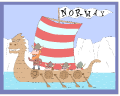 Fjords. Mountains. Land of the midnight sun. We are busy planning a trip. We hope to see all this and more when we travel to Norway next summer. Both my husband and I have Norwegian roots, and we are going to see where our ancestors lived. We will get quite a tour of the country, because our families lived far apart from one another.
Hedmark
My husband’s family emigrated in the early 1880’s from the Ringsaker District of Hedmark, Norway. They lived between Lillehammer and the Swedish border, near Lake Mjøsa. We plan to stay in Hamar, the largest town on the lake.
According to family legend, water from this lake is essential for the proper baptism of infants. We actually have some of this water, collected several years ago by my husband’s mother. Our two grandsons were baptized using this water.
While in Ringsaker, we will visit the family farm and the Ringsaker Church where generations of Hjelmstads have been baptized, confirmed, married, and buried. We will also stop in to see the remains of Hamer’s thousand-year-old cathedral which is now protected by a glass dome. If we get time, we may visit one of the tall runestones in the area.
Nordland
My family lived by the Norwegian Sea, in the Vesterålen and Helgeland Districts of Nordland, Norway. We plan to drive through the various parishes where they resided before immigrating in 1905—Øksnes, Eidsfjord, Bø, Hadsel, and Nesna. To travel between the islands of Vesterålen, we will take speedboats and ferries. Perhaps we will see racks of drying codfish, a sight that would have been familiar to my fisherman ancestors.
Even though we will be traveling in the summertime, we should take cool weather clothing for this leg of our journey. Nordland lies mostly north of the Arctic Circle.
One Final Stop
We plan to fly to and from Norway on Icelandair with a stopover in Reykjavic. We just have to visit Iceland’s Blue Lagoon geothermal spa, the most visited attraction in Iceland. So we will plan to extend our trip by one more day to do just that. Artic weather followed by a dip in geothermal pool sounds great to me.
Learning to Organize the Chaos
 The timing could not have been better. Just as I resolved to organize my photos, the Computer Interest Group of the Colorado Genealogical Society (CIG, to the locals) offered a program on this very topic. Of course I was right there on Monday evening to learn all I could.
The speakers, Nancy and Gary Ratay, have a lot of experience with digital preservation. He is a retired IT professional; she is the Editor of the Colorado Genealogist, the quarterly publication of the Colorado Genealogical Society. These folks have lots of digital images, and they can find one when they want it.
First, they addressed the issue of an organization structure for images. They have images of not just the portraits and cemetery photos that I want to organize, but also images of all their documents. They stressed the importance of using standardized keywords (people, places, and events) to label images and sort them into folders. They created Surname folders for people and Place name folders for items like cemetery photos and county histories. Some items go into both types of folders. Once they had this system set up, they documented it by leaving “help” sheets for their heirs and placing “help” pages and keyword lists in each folder.
Nancy and Gary also discussed types of organizers for images. In addition to mentioning the Picasa software that we have used, they suggested a more robust browser-based organizer: Adobe Bridge. The latter looks like a powerful tool but probably too complex for what I need.
I think I will emulate the organization system they use, but I will stick with Picasa to do it. I already have it installed on my computer, and I have some familiarity with it. Now, thanks to Nancy and Gary, I have an organization plan and can move ahead. Of course, as they pointed out, you cannot eliminate the chaos, you can only reduce it.
Learn the Software First
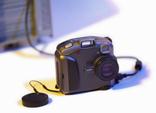 This week I plunged into my photo project. As a novice in the digital image world, I am trying to take a measured approach to this. If I take on too much too soon, I know I will get too frustrated and discouraged to continue.
I decided to begin with our family snapshots from last year. Even that presented complications when I realized that I could not retrieve them all from one place. The camera held some; our cell phones held others. I had no idea how to get them off these devices in order to collect them for editing and preservation. My trusty husband/tech advisor solved this dilemma for me by doing this chore himself. He even vaguely promised to teach me to do it myself someday.
He put everything into our Picasa program on my desktop computer. Then he showed me how to edit the photos (by improving the colors if necessary and removing red eye) and how to create an album for the year. Enough to learn at one sitting! I made a successful start at using Picasa, and now I have a nice little digital family album for all the family photos we took in 2012. We also ordered prints of the photos so this Luddite will have copies in case the digital album disappears. Of course that is unlikely because we keep everything backed up.
My next step will be to create another album of our cemetery photos. I plan to use Picasa to organize that, too. We already have some of these photos in Picasa albums, but I will need to scan others and then organize it all (by surname? cemetery?). And how should I label the photos? I want to preserve the cemetery names, the names on the gravestones, the dates the photos were taken, and the name of the photographer.
Next week the husband/tech advisor will be called on again to teach me how to make this new album. I also hope to learn how to transfer the photos from Picasa to my genealogy database. I have no idea how many cemetery photos we have, but I think this could take awhile.
The Photo Mess
 For many years, I sorted, labeled and filed family photos during the month of January. These included snapshots we took, school pictures, and photos we received during the Christmas season from family and friends. I enjoyed this review of the previous year, and it took less than an afternoon. If my children care to keep them, these photos will be around to document our family life for a long time.
Now times have changed, and the photo preservation process has become a daunting journey into a digital netherworld. In addition to labeling and filing my prints, I must figure out how to scan them and where to store the digital files. On a hard drive that will fail in time? In the cloud with a service that might not be there in ten years? How do they pass to the next generation?
The same dilemma applies to those photos that never make it to print. I must figure out how to transfer them from the cell phone or digital camera to whatever storage place I select. I must wrestle with photo management software. I find it all much more time-consuming than it took to manage prints.
The digital age seems ideal for photo sharing but clunky for photo preservation. We take way too many photos to manage comfortably these days. As a genealogist, I am interested in keeping pictures for posterity, but how many do I need? I have no interest in posting 4000 pictures of my family on Facebook as I have heard that some people do.
I have not yet devised a workable digital age photo management system for my family in this new era. I will work on one this year and create a system that works for us. It is time to tame my photo mess.
A Genealogy New Year’s Resolution
 A new year beckons. With it comes the opportunity to begin a new genealogy project.
Since I left my day job, each year I have focused on researching the life and lineage of a set of my great-grandparents. At Christmas time, I have written a biographical sketch of the chosen person and distributed it to the family. I completed that project this year, and I would like to begin to move back in time to work on my great-great grandparents. I may do one of them in 2013.
But I have another project in mind that will take most of my time. Over the years I have collected many family photos, and they are out of control. I have my own family photos stored in boxes and many portraits of previous generations filed in archival albums. I have digital copies of numerous cemetery markers. I also have paper bags full of pictures I salvaged from my parents’ house.
I need to sort and file everything. I want to take the time to digitize the portraits I have collected and to post them on my website. I want to add the cemetery marker photos to the website and to FindAGrave.com. Organizing, scanning, and uploading everything will take a lot of time, but I cannot stand the mess any longer.
I do not particularly enjoy working with electronic gadgets, so I know I will stop working on photos periodically to do some research on a great-great grandparent. I have gathered quite a bit of information already on some of them. I can flesh out one of their stories for a biographical sketch next Christmas. This way, I can enjoy doing a little research and move ahead with my writing project while preserving some family history all in the same year.
Now, how do you run that scanner again?
Advent Calendar and Christmas Eve
 This Christmas Eve I see that I did not reach my goal of putting up a new Christmas-related post each day of Advent. Getting ready for Christmas is like a part-time job, and it takes up a lot of time. Some days, other priorities got in the way of blogging.
About noon today, I finally finished all the Christmas preparation I had planned. I have done the baking (made the fudge this morning), wrapped all the gifts, and sent out all the Christmas cards. Now I can sit back and enjoy the afternoon before the big evening begins.
As I have done all my life, I will join with other family members on Christmas Eve to eat Christmas goodies and open gifts. Years ago, my grandparents came to my house for these activities; now I go to my oldest son’s place to spend the evening with children and grandchildren.
Thus the circle of life continues. I am grateful for this new generation to share holiday traditions with me. Although my sons’ children do not celebrate Christmas exactly the way I did because their mothers have traditions of their own, still we keep Christmas and enjoy family time on Christmas Eve. We have waited 364 days for this night, and I am savoring this special time today.
Advent Calendar and Religious Services
 In the 50’s and early 60’s, most people in America celebrated Christmas as a Christian holiday. We saw manger scenes displayed in public places, and we heard carols played in stores and on the radio. As not-particularly-religious Lutherans, my family accepted this as part of the natural order.
Because the Christmas story permeated the culture, our church congregation did not work particularly hard to go beyond that. The congregation observed the church season of Advent on the four Sundays before Christmas simply by lighting Advent candles each Sunday.
Every year the church Sunday School put on a Christmas program for parents and other relatives. My brother and I participated in these. Each class usually had a part in the program—either by providing actors and narrators for the manger scene and Christmas story, singing a song, or doing a choral reading. We also joined in songs done by the entire Sunday School.
When the holiday finally arrived, the church offered services on both Christmas Eve and Christmas Day. Our family did not attend either one.
As I grew older and began to participate in church youth activities and choir, I became more observant of church rituals. I began attending the Christmas Eve church service, usually by myself, either before or after my family opened gifts. They did not mind accommodating that although most of them had no interest in attending the service.
These early experiences set a pattern for my life today. I still observe Advent with a wreath and short daily devotions in my home. I know all the traditional Christmas carols after learning them for programs in my youth. As my Scandinavian ancestors did, I attend church on Christmas Day now instead of Christmas Eve. Religious services and rituals for the Christmas season still seem like the natural order of things to me.
Advent Calendar and Santa Claus
 Do you believe in Santa Claus?
At our house in the ’50’s and ’60’s, we did. Each year he gave each child the nicest Christmas present he or she would receive. Santa always came around sometime during Christmas Eve while we were opening all our other gifts. Suddenly we would hear our doorbell ring, and we would rush to the door. There we would discover that Santa, like a modern-day UPS deliveryman, had left a wrapped gift for each of us on the front porch. This was the best he could do at a suburban house with no fireplace and chimney.
Only once did we actually see Santa. He was actually a guy from my dad’s office who dressed up in a Santa suit that year to deliver gifts to the children of co-workers. We lived several doors down the street from another of my dad’s colleagues, so our Santa went on foot from one house to the other. Unfortunately, the little boy who lived in a house between these two happened to look out his window just in time to see Santa walk right past his house with his bag of toys. Our stunned neighbor boy thought all his worst fears of being too naughty for gifts had come true.
I was about 5 or 6 years old when I began to suspect that Santa was not as my mother would have me believe. I noticed that when we went out shopping, he somehow made it from store to store before we did, and he looked a little different each time. In an amazing coincidence, he also used the same giftwrap paper that we had. I became very suspicious about the entire concept of Santa, and my mother finally came clean about it. I felt betrayed.
I never got over that feeling, so I did not perpetuate the Santa myth with my own children. Perhaps they in turn felt betrayed at missing out on the whole thing, because Santa visits their homes today. I still prefer to think that Christmas should be focused on something other than a mythical jolly man in a red suit, so he does not visit my house.