PowerPoint—A Genealogy Tool
 March 2nd, 2017 |
  Author:
  Every once in a while I must take some time for computer training. The time will arrive again this weekend when our local Sons of Norway genealogy study group meets.
This Saturday our leader wants to provide PowerPoint training for everyone. She hopes that familiarity with this software will encourage more people to step up to create entertaining programs for both the genealogy group and the Sons of Norway Lodge meetings.
I must confess that I am as guilty as anyone in avoiding proficiency with PowerPoint. Oh, I have had PowerPoint training in the past. I got through the training class at work about 10 years ago but never used it again. Now my knowledge is quite outdated because we did not learn how to acquire and insert images for the slides. I know how to create pages with text only.
Nowadays, the slides for an interesting presentation need illustrations. The very idea of finding and inserting these seems overwhelming to me. If I take my own photos, I will have to figure out how to transfer them to my PC and then put them in folders which I will never remember how to locate later. If I use someone else’s images, I will need to worry about acquiring the appropriate copyright permission. No wonder I do not volunteer to create PowerPoint presentations.
Other people’s testimonials do not encourage me to try it. One professional genealogist I know had done many, many valuable training classes over the years. She quit when PowerPoint became the standard of delivery. Even my son, a very tech-savvy Army officer, says he wishes PowerPoint had never been invented. His superiors want a PowerPoint for everything, and it takes up so much of my son’s time to prepare each one.
My husband/tech advisor has offered to teach the upcoming PowerPoint class for the Sons of Norway. He seems to have little trouble with it and readily volunteers to use it for speaking engagements. Perhaps he can give all of us some insight into how to create a presentation with good-looking slides.
Once armed with some ability to put together a few interesting PowerPoint slides, I might step up and provide a program or two for the Sons of Norway. I do not mind speaking to a group, and I have a lot of knowledge I could share. Perhaps others like me could do the same. I am glad our leader has this idea for encouraging us.
 Posted in
52 Stories #8—Shared Experiences
 My husband/tech advisor and I married over 42 years ago. Consequently, we have lots of shared memories. Let’s see if I can recall a few of the highlights:
1972—Mutual friends introduced us at the University of Wyoming.
1973—We went to a movie on our first date, became inseparable, and got engaged later that year. He received a B.S. in engineering that spring and began graduate school.
1974—We were married at Prince of Peace Lutheran Church in Casper, Wyoming. We honeymooned in Hawaii where we tried surfing. We never did it again.
1975—I received a B.A. in education. He received an M.S. in engineering. We moved to Austin, Texas.
1976—We embarked on our first jobs. He worked at Texas Instruments while I taught in a Lutheran school.
1977—I began law school at the University of Texas at Austin.
1978—We bought our first house.
1979—Our eldest son was born.
1980—I graduated from law school. We returned to our home town in Wyoming, and he went to work for Tooke Engineering. We attended his first high school reunion.
1981—I went to work as a Petroleum Landman for Gulf Oil and Exploration Company. He began spending evening and weekends as a sports referee.
1982—He took a new job with MiniMart convenience stores managing the computer department. I volunteered as a piano accompanist at Good Shepherd Lutheran Church.
1984—Our younger son was born. Our eldest son started kindergarten. We took a 10th anniversary cruise around the Hawaiian Islands.
1985—I was transferred to Colorado after Gulf was sold to Chevron Corporation. He left MiniMart and went to work for McDonnell Douglas in Aurora, CO. We began long careers as sports and Boy Scout parents, starting with soccer and moving on through swimming, tee ball, basketball, lacrosse, and hockey. The boys both eventually achieved the Eagle Scout rank.
1986—He began free-lance computer consulting, and his work took him to China. I passed the Colorado Bar Exam.
1987—He changed jobs again, going to work for Gates Corporation.
1988—I left Chevron and began a stint as a stay-at-home mom. During those years I taught Sunday School and volunteered as a Cub Scout Den Mother.
1990—He had back surgery the same week our house was severely damaged in a hail storm.
1992—I went back to work as a substitute teacher in the local middle and high schools. He stopped refereeing and began arranging handbell music.
1993—We joined in a family hunting trip to Grand Teton National Park, and our eldest son got his first elk.
1994—We took a Caribbean cruise for our 20th anniversary.
1995—I began a 4-year stint on the Colorado Genealogical Society Board of Directors.
1996—I went to work part-time for the local library district.
1997—Our eldest son graduated from high school and began college at my husband/tech advisor’s engineering school.
1999—We took another Caribbean cruise for our 25th anniversary.
2000—He had a second back surgery.
2001—We took a third Caribbean cruise with the in-laws for their 50th wedding anniversary. Our older son graduated from the University of Wyoming.
2002—Our younger son graduated from high school and joined the Army.
2003—We joined Bethany Lutheran Church. We took my dad on a 75th birthday trip to England and Scotland in May. Our younger son began attending the U.S. Military Academy at West Point in August, and we became West Point Parents. We attended Plebe Parent weekend and our first All-Service Academy Ball. Over the next four years we took several trips to West Point for special events, and we used that as a launching spot for vacations in every direction—Niagara Falls, Fort Ticonderoga, Philadelphia and Valley Forge, Boston and Cape Cod.
2004—He began bell ringing with the Bethany Carillons Handbell Choir, and I joined the group the following year.
2007—Our son graduated from West Point and got married.
2008—We took a Rhine River cruise with my husband’s brother and his wife. I retired. Our first granddaughter was born, and we attended her baptism.
2009—Our first grandson was born.
2010—Our elder son was married, and we acquired two step-grandaughters.
2011—Our second grandson was born. I left the handbell choir and joined the Bethany Chancel Choir. That Christmas, I had the opportunity to perform Handel’s Messiah. We sold the house the boys grew up in and bought a patio home.
2012—Another granddaughter was born.
2013—We took a trip to Norway to celebrate our birthdays. We visited farms where our ancestors had lived in Hedmark and Nordland.
2014—We traveled to spots my ancestors lived in Finland and Russia to celebrate our 40th wedding anniversary. We joined the Sons of Norway and became active in Fjelldalen Lodge.
2015—With the Chancel Choir, I performed Bach’s St. John’s Passion in German. I was elected Musician of the Sons of Norway Lodge.
2016—We took our first train trip when we rode Amtrak’s California Zephyr to San Francisco. I represented Fjelldalen Lodge at the District Six Convention.
This list cannot contain all we did over the years. It simply lists the high points I can recall in one sitting.
Lots of great memories!
A Seemingly Dead End with Katherine
 Again I spent the week searching for my mysterious German ancestor Katherine Stillenbaugh/Stansbaugh, and again I found almost nothing. Katherine’s daughter was reportedly born at Edinburg, Johnson County, Indiana in April 1865 so I tried a few different sources for that location:
- A close review of a 1913 history of Johnson County revealed no mention of a Stillenbaugh or Stansbaugh family in the county. I also looked for similar sounding German names like Stilgenbauer and Stillabower, but I found none of those, either.
- I searched the 1860 U.S. census for Johnson County for any girl named Katherine/Catherine who was born between 1830-1850. The only unmarried Catherine was Cath McLane, born 1840, living in Clark. This does not seem a likely match.
- I searched Bartholomew, Brown, Johnson and Shelby counties for single girls named Katherine/Catherine who were born in Germany between 1830-1850. There were none in Brown, Johnson, and Shelby Counties. In Bartholomew, I found five: Catherine Ball, Catherine Mench, Catherine Strawbeck, Catherine Vogelpohl, and Catherine Woerner. I could follow up on these girls to locate their marriage records. This would tell me the names of their spouses. Anyone not married by 1865 would be a candidate for the woman who married my 2nd great-grandfather.
After finding nothing probative in these searches, I broadened my census search terms to look nationwide for single girls named Katherine/Catherine Stil* or Stan* born 1830-1850 in Germany. This search turned up three women:
- Catherine Stilgebauer, born in Ohio in 1837, living in 1860 in Bucks Twp., Tuscarawas Co., OH with husband Jacob and daughter Sophia. Wrong marital status, wrong birthplace.
- Catherine Stansbaugh, born in Baden in 1846, living in 1860 Bethlehem, Stark County Co., OH with parents John and Margaret. An alternative surname of Steberger for this person has been added on Ancestry.com. I should search for more information on this woman. Did she move to Indiana? Was her true name Stansbaugh (wouldn’t that be great?) or Steberger?
- Catherine Stillbower, born in 1830 in Germany, living in 1850 in Perry Twp., Stark Co., OH in the Henry Shike household. She did not appear under the same surname in 1860, so she probably had married by then.
None of this gives me much to go on. With no marriage record, no certain census record, and no grave for my Katherine, my only hope will be either to uncover something in a record created by one of the as-yet-unidentified male relatives in her life or to find a DNA match to a German family. I have a lot of records left to search.
52 Stories #7—Finding A Spouse
 Last week I wrote about how my parents and grandparents found their spouses. This week I will tell how I found mine.
As teenagers, my friends and I often thought about our future marriages. Even in those “Women’s Lib” days, I think most of us wanted to find a Prince Charming–someone tall and handsome. Beyond that, I wanted a guy who was smart, responsible, nice, Lutheran, and a non-smoker.
Looking back, my odds probably would have been better had I attended a Lutheran college. Unfortunately, those institutions were all far away from my small, Wyoming town, and they cost more than the state schools did. So I dutifully went off to the University of Wyoming and hoped for the best. After all, I thought, my parents had met there.
Before long, I, too, had found the almost-perfect person to marry. He was an engineering student, a couple of years older than me. Mutual friends introduced us.
Our first date presented some difficulties. When he first called me and suggested going out, I already had an out-of-town trip planned for that day. Luckily, he called again and suggested another time, which I happily accepted. Then I got sick. Not wanting to postpone again and risk losing him forever, I skipped classes that day in hopes of getting better fast.
That evening, still not feeling great and probably contagious, I went out with him anyway. As the evening progresses, we talked non-stop and found we had so much in common. Same home town. Norwegian heritage. Mothers who were teachers from Minnesota. Interests in music and the outdoors. We even learned that I already knew several of his cousins.
There was only one problem. He was Roman Catholic. This would be a deal-breaker for me. I have always felt families should attend church together, but there is no way I could convert in good conscience to Catholicism and subscribe to some of their beliefs.
Luckily for me, he was not all that committed to the Roman faith himself; in fact, his father’s family was Lutheran. My true love was willing to leave the Catholic Church and embrace his paternal Lutheran religion. And he did.
Yes! Now he truly was perfect, and we married in the Lutheran Church a couple of years later. We still belong to a local Lutheran congregation. Activities there constitute much of our life together. This year we will travel with the church choir to the Land of Luther to see all the German sites associated with our Lutheran heritage.
To this day, my spouse fits the bill—tall, handsome, smart, responsible, nice, and a Lutheran!
52 Ancestors in 52 Weeks #57 & 58—Simon Myllynen and Sofia Ampuja
 During the 19th century, my Myllynen ancestors lived near what was then Finland’s second-largest city, Viipuri. This municipality lies east of the Baltic Sea on the Karelian isthmus at a distance of 81 miles northwest of St. Petersburg. It is known for its landmark Vyborg Castle, built by the Swedes in 1293.
When the Viipuri parish was ceded to the Soviet Union after World War II, all the Finns left and resettled in other parts of modern Finland. Today the town of my ancestors is known as Vyborg and only Russians live there.
Simon Mattson Myllynen was born at Tervajärvi on July 8, 1810 to Matti Johansson Myllynen and Anna Simonsdottir. They had him baptized a couple of days later in the Viipuri rural parish. When Simon grew up, he married a local girl, Sofia Hendriksdottir Ampuja. Their marriage took place in the Viipuri rural parish on December 11, 1831 when he was 21 and she was about nineteen. They made their home and raised their children at Tervajärvi.
Simon and Sofia had ten children:
- Matthias, born February 10, 1834,
- Elisabeth (Liisa), born April 25, 1836, my second great-greatmother,
- Henric, born December 24, 1838,
- Helena, born May 27, 1841,
- Henric, born May 27, 1841,
- Regina, born June 1, 1844,
- Philip, born April 15, 1847,
- Adam, born March 11, 1849,
- Adam, born May 30, 1851,
- Filip,born May 20, 1851.
Simon worked as a farmer. He did not have along life, and he passed away at Tervajärvi on April 10, 1857 at the age of forty-six. He was buried at the Viipuri rural parish a week later on April 17, 1857.
A Genealogical Spring Ahead
 We have unseasonably warm weather in the Denver area right now. It feels like spring. When that season finally arrives on the calendar, I have some exciting genealogy activities planned:
- On April 1, my husband/tech advisor and I will present a Sons of Norway program on the reasons for Norwegian emigration to America.
- On April 8, I will attend the annual Colorado Genealogical Society seminar. David Allen Lambert of the New England Historic Genealogical Society will discuss various aspects of New England research. My dad’s Bangs, Burgess, Dunbar, Hall, Hathaway, and Snow families lived in Massachusetts during colonial times, so I am hoping to pick up some tips for researching these lines.
- On May 6, Dr. Fritz Juengling, a German research consultant at the Salt Lake Family History Library, will speak at the Palatines To America seminar. I am devoting my research time this year to identifying my German ancestors, if any, and I hope to get some ideas for moving forward on this.
- My church choir will tour the Land of Luther in Germany this year as part of our celebration of the 500th anniversary of the Reformation. I come from a Lutheran family on my maternal side, and the opportunity to see the Luther sites fulfills a lifelong dream of mine. As a bonus, my husband/tech advisor and I will leave a few days early and visit his family villages in western Germany.
Each of these events offers the chance for me to pursue my genealogical education. With this varied mix of experiences, I hope to get some insights into many aspects of my heritage—Norwegian, German, and English. If I am truly fortunate, these opportunities will translate into a spring forward with in my research.
52 Stories #6—Parents and Grandparents
 Ah, love is in the air this week, and for this week’s assignment I will retell the stories of how my parents and grandparents met and married.
My Parents
My mom and dad, Earl and Joyce, met in college at the University of Wyoming about 1950. Both needed to work to get through school even though my father had money from the GI Bill after his naval service in World War II. He had always liked to wash dishes, and he took a dishwasher job in the women’s dining hall. My mother worked as a server there. Imagine that, a college eatery where they had wait staff instead of a buffet line. Anyway, they met at work.
They dated for several years, even after my mother graduated and moved on to a small Wyoming town to teach high school. It was important to her to get two years’ teaching experience before she got married. During those years, my dad worked odd jobs around Wyoming and Colorado and went to school off and on.
I asked Mom once about his wedding proposal. All she would say is that it happened in a car.
They married in the Lutheran church on December 22, 1952 in Rapid City, South Dakota, where her parents resided. For their honeymoon, they drove to Salt Lake City because they wanted to see a city that was new to both of them. There, in a store window, they saw television for the first time.
Mom and Dad had been married for 47 years when she passed away in 2000.
My Dad’s Parents
Owen Herbert Reed (1896-1935) and Grace Riddle (1896-1976) met when he moved west from Missouri to work on her family’s Nebraska ranch near Hyannis. Herbert’s father, a couple of brothers, and a sister had already moved to the area, so it must have been natural for him to follow them.
Grace’s cousin Henry Evert had previously married Herbert’s sister Bertha. The marriage of Herbert and Grace strengthened the tie between the two families. My grandparents were married by the Grant County Judge on April 18, 1918. I wish I had thought to ask her about her wedding.
Unfortunately, their marriage was not a long one. My grandfather died in a road accident in 1935 after they had been married for seventeen years. Grandma never remarried.
My Mom’s Parents
Bjarne Kaurin Bentsen (1906-1986) and Martha Louise Mattila (1906-1977) met when she left her Minnesota home after finishing college and went to teach at a country school in Montana. Teachers there boarded with the families of their students, and she lived on the Bentsen homestead near the Two Tree School. My grandfather had two younger siblings in her class.
Both Bjarne and Martha grew up in Lutheran families, but for reasons unknown to me, they did not marry in the local Lutheran church. Instead, they went to the nearest bigger town, Plentywood, and married at the Congregational Church on June 2, 1928. Again, I wish I had asked my grandmother why this was. They raised their children as Lutherans.
We always liked to say that theirs was a mixed marriage because he was Norwegian and she was Finnish. Indeed, their marriage was a stormy one that ended in divorce thirty-two years later in 1960, a couple of years after their youngest child had left home.
My grandfather remarried right away, but my grandmother never did. They carefully avoided one another when I was young. We were all surprised when he attended her funeral.
Combing the Indiana Records
 The hunt for information about my 2nd great-grandmother, Katherine Stillenbaugh, continues. To make any progress I must follow a disciplined research plan.
I start with the only fact I know about her. She lived in Indiana in 1865. There she bore a daughter, my great-grandmother Anna Petronellia Sherman, in April of that year. The family always reported that Anna Petronellia was born at Indianapolis and Katherine died there, but Anna P.’s 1885 Kansas census record gives her birthplace as Edinburg, Indiana. This town lies 20-30 miles south of Indianapolis in Johnson County near the intersection of three counties—Bartholomew, Johnson, and Shelby.
With Indiana as a starting point, I began my research by identifying what Indiana records might exist and where they might be housed. During a visit to the Denver Public Library a couple of weeks ago, I consulted the National Genealogical Society’s Research in The States guide for Indiana. It provides many research options.
I decided to begin with online offerings at the major state repositories. These include the following:
- Allen County Public Library,
- Indiana Historical Society,
- Indiana State Archives,
- Indiana State Library,
- Several academic libraries.
Over the last two weeks I began visiting the websites for these institutions. I found little useful information on the Allen County site, and I learned that the Indiana Historical Society has no online databases.
The Indiana State Archives offers a digital archive. There I found some military records and commitment papers for the Stilgenbauer family but nothing for the Shermans. I continue to work under the hypothesis that because of the similarity of names, the Stilgenbauers might be my Katherine’s family, so I collected their information. Unfortunately, nothing here offered any evidence of a connection to my ancestor.
The Indiana State Library has several digitized genealogical resources, and I looked first at Bartholomew County, for no other reason than it is first alphabetically on the list of the three counties of interest. The library holdings included county histories from 1888 and 1904—long after my ancestor died and her daughter had moved on to Illinois and beyond. Neither volume mentioned the Sherman family at all nor did they contain any relevant information about the Stilgenbauer family. The third book was The People’s Guide, an 1874 county directory that serves as a census substitute in the absence of a state census.
The People’s Guide tells me that Nicholas Stillabower, born in 1823 in Germany, lived seven miles west of Taylorsville (about 5 miles south of Edinburg). He had settled there in 1851. He was a Democrat and a Lutheran. From earlier research, I know that Nicholas did have a daughter Catherine who was born in 1847, the right age to be my Katherine. Unfortunately, this Catherine married someone named Long and lived until 1883. The only way she could be my ancestor is if the story of Katherine’s death in childbirth is wrong. Instead, the death story would have been concocted after she and the baby’s father had separated. Before going down this road in my research, I plan to continue the search for my Katherine elsewhere. Still, it is a possibility to keep in mind.
My next step will be to continue my research at the Indiana State Library by moving on to Johnson County. This takes a tremendous amount of time, but I must search every source available. Doing it from home certainly takes much less time and money than making a trip to Indiana to do it. I may need to go there eventually, but much remains for me to do from Colorado first.
52 Stories #5–Friends
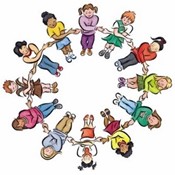 As I begin to work my way through the suggested Story topic for February, I come to Friends. Here again, I have some difficulty addressing the proposed subject. I am a bit of a loner.
In my early years, I played mostly with my brother, who is just 20 months younger than me. We served as each other’s best friend. We lived in North Dakota, where the weather often made it too cold to play outside much. In those days, parents never dreamed of arranging play dates. Most kids simply played with their numerous Baby Boomer siblings when we were not outdoors.
Our family moved to a new house when I was a preschooler, and there I met the girl next door, Linda. She was a year older than me, but we spent a lot of time together. By then I was old enough to use the telephone, and on my own I could arrange get-togethers with her. Linda had several older sisters who were even older than us. The one closest to her in age, Linnea, played with us quite often. Linnea taught us how to catch butterflies and mount them in a display case. Linda and I liked to play in my backyard where we had very little supervision because my mother stayed inside doing housework and tending to my brothers. Once when Linda and I were out on my swing, I got my long hair caught on the chain. Linda ran inside to alert my mother to come and free me. Another time, as Linda attempted to climb over our locked gate, her jacket hood caught on a picket and left her hanging in the air. My mother finally heard her frightened shouts and ran outside to lift her down.
We left North Dakota when I was six, and I never saw Linda again. Of course we were too young to keep in touch with letters.
After a couple of moves, my family ended up in Wyoming. During my school years there, I had a couple of good friends. Karen lived nearby, and we met in the third grade. In high school, we teamed up as debate partners for two years, and that required us to work closely and travel together. We went on to the same college where we were roommates for a year. After that, we seemed to grow in separate ways, and we no longer keep in touch.
I met Penny when I was in the third grade, too. She and I sang together in the children’s choir at our church. We both liked to participate in church activities, and you could find us together at those as we grew up. Penny and I served as Maids of Honor for one another when we got married. Our children are close in age, and she is Godmother to one of mine. She now lives in South Dakota, while I live in Colorado, but we keep in touch and have enjoyed occasional visits over the years.
During college, I met Heather, who is just like me. We have so many interests in common—love of history and genealogy, pursuit of handiwork hobbies like knitting and embroidery, interest in book clubs and libraries, and a desire to make music. We moved to different states after graduation but have always corresponded. We often find that we independently do the same things. One year we discovered that we had both planted the same variety of cherry tree so that we could make pies. I see her sometimes when she comes to Colorado to visit her mother.
Nowadays, my husband/tech advisor is my best friend. We do everything together—music activities at church, Sons of Norway events, genealogy. I was comfortable with him on our first date while we were in college, and we have been inseparable ever since. Outside of our little duo, we participate in various civic groups, but mostly we tend to keep to ourselves.
Like I said, I am a bit of a loner. I find it stressful to be around other people too much. It is enough to keep in touch with Penny and Heather and to know all my neighbors.
A Surprising Opportunity
 Occasionally an opportunity to volunteer for a short commitment comes along. One of these came my way a couple of weeks ago.
I had gone to lunch in January with a group of other members of the Colorado Genealogical Society (CGS). We went to a Chinese place to celebrate the new Year of the Rooster. The group had a great time talking about genealogical things as we bonded over Chinese food. Afterwards, I went home to resume my solitary genealogical pursuits.
The next day I received a request from the person who had sat next to me at lunch. Would I help judge this year’s CGS writing contest? What? Someone thinks I know enough about writing to judge a contest?
I have never done anything like that before. I am not a professional writer. Yet I have done a lot of writing, both in law school and at work and occasionally for magazines, including the quarterly journal that CGS publishes. I also write this blog. Perhaps these credentials counted enough for what they needed. By serving as a judge, I could benefit personally, too. Judging the contest would give me a chance to stretch myself into something new while simultaneously assisting the Society. I accepted immediately.
Shortly, I received the contest rules and writing guidelines, blind electronic copies of nineteen submissions, and the contact information for two other judges. We began our task by corresponding a bit to settle on a judging process.
After I had read all the contest entries, I selected my favorites. The other judges did the same. Then we met at Denver Public Library to compare notes.
Luckily, we easily agreed on the contest results. We then submitted our decision to the person who had recruited me originally. Because several of the submissions have a Colorado connection, they will go on to be considered for publication in the CGS Quarterly magazine if the author so desires.
Serving as a contest judge was a wonderful experience. I felt I did something worthwhile, and I truly enjoyed reading the stories written by those who took the time to enter the contest. We have some good genealogists out there.
Kudos to CGS for running this contest. It accomplished so many things. It encouraged nineteen people to write about their families. It solicited some good content for our CGS publication. And it gave me the chance to learn a new skill.