Archive for the ‘Genealogy’ Category
Pagan-like Symbols on a Norwegian Marriage Record
 August 12th, 2013 |
  Author:
  Imagine our surprise when we unearthed a Church of Norway (Lutheran) marriage record decorated with pagan-like symbols. The record comes from the Voss, Hordaland Ministerialbok, 1731-1773. On page 148 we found my ancestors, Mons Eriksen and Brita Christoffersdatter, wed in 1771. Every entry on the page includes a couple of tiny, mysterious drawings.
In the words of Martin Luther, “What Does This Mean?” We do not really know, but we would love to find out. Do the symbols apply to the bride and groom? Their families or best men? The farms where they lived?
I have learned that the Voss area was Christianized late and forcibly so by St. Olaf. Perhaps these symbols date from Norway’s pagan era. But why add them to a Christian marriage record? Someone must have an answer, and I need to begin searching for the person who can explain.

 Posted in
What is the Outlook for Genealogists?
 People used to joke about when they would be “done” with their genealogy. The historical answer was “never” because you never run out of ancestors. Recently, though, I have found myself thinking about all the changes in the genealogy and family history world in recent years. Where will this technology-driven environment take us? Could genealogy be “done” in my lifetime?
I learned to do genealogy the old way. We joined local societies to learn how to do genealogical research. We kept voluminous notebooks of family group sheets and exhorted ourselves to write at least a letter per week soliciting information from relatives and vital records offices. We ordered microfilmed records from the Family History Center and occasionally drove over to Salt Lake City to use the huge genealogy library there. I felt blessed to live in the greater Denver area with its easy access to the wonderful Denver Public Library and branches of the BLM and the National Archives. Our goal was to produce a beautifully-bound book on our lineage. It took a lifetime to gather the information.
Nowadays, I keep my genealogical records electronically, and probably I will never write that book. I rarely visit the local repositories because I can find so much information online. The same goes for genealogy meetings. Instead of gleaning tips from speakers at the monthly meeting, I learn to do genealogy by attending seminars and conferences, or using the helpful materials on the LDS website https://familysearch.org/.
A huge genealogy industry has sprung up in recent years. Professional speakers traverse the country and vast websites offer valuable collections online. We even have genealogy television shows. Anyone willing to pay all the fees can reap a bonanza of records, educational materials and DNA results. Instead of compiling genealogy books, thousands of people use this largesse to add family lines to the collective world family tree.
So what happens when the world family tree is more or less done? What becomes of the genealogy hobby then? Will new genealogists spend most of their time verifying the work of others or collaborating to break down the remaining brick walls? Will people do genealogy at all if it means simply plugging oneself into the world tree developed by others?
Digitization of records and sharing of family information continues at breakneck speed. Most people can look at the compiled world tree and find some of their ancestors already listed. I think I will see the day when we have a complete database, at least for Americans. Will the world still need genealogists then?
Calling All Relatives in Norway
 Since our return from our trip to Norway we have heard the same question asked: Did you look up your relatives? The short answer is “No”. Even though we might have been interested in doing so, we did not even try.
For many reasons, we do not know the names of any of our Norwegian cousins or where they might live:
- Our great-grandparents emigrated with their extended families. Any people who remained behind were their cousins, meaning that relatives alive today are quite remote to us, fourth cousins or so. The American and Norwegian families have not been in touch since our great-grandparents died in the early-to-mid twentieth century. We have no contact information for any relatives residing in Norway today.
- Our families left when Norway still used the patronymic system based on the given name of one’s father. No one had a surname that we can trace. That changed in Norway only about 1920, long after our families had left. We do not know what names the Norway families chose as surnames. They may not call themselves the same names chosen by those who emigrated—Hjelmstad and Walstad (chosen from farm names in Norway) or Bentsen (chosen from the patronymic of one immigrant’s grandfather).
- Although my husband/tech advisor could have distant relatives remaining in the same Ringsaker region where his family always lived, I do not know where to begin looking for mine. They lived in fishing villages on the numerous islands of Lofoten and Vesterålen. Today, the Norwegian government pays residents to leave these small, remote islands. Where would I look now for relatives?
- Our website displays our family tree back to the 1600’s on many Norwegian lines. No descendants living in Norway have ever contacted us.
That said, I must confess that several Norwegians we encountered on our trip asked us whether we planned to visit relatives. “They would want to meet you!” they said. When we explained we did not know of any relatives, they said that is no excuse.
One shopkeeper strongly advised us to visit the local record repository. He claimed they would identify and locate all our relatives for us within the hour. Really?
We did not try it because we had a tight schedule. Not wanting to miss out on seeing some of the sites on our itinerary, we opted to continue with our trip as planned. But if anyone else in the family visits Norway, it might be fun to try looking up the relatives. They would want to meet you!
Ancestors and Church Life
 I think I knew that church membership played an important role in the lives of our ancestors. As a product of the American system of a separated church and state, I just did not appreciate how extensive a role it played for these people. Recently, as I entered a lot of data derived from Church of Norway documents into my computer program, I came to realize how fully the Scandinavians in the 18th and 19th centuries entwined church life and everyday life.
They marked their rites of passage in Lutheran religious ceremonies—baptism, confirmation, marriage, and burial. The church carefully recorded these important occasions, and we can view the records today, hundreds of years later. In addition to facts about the event, the records also provide information on names of an ancestor’s parents and the places they lived. They even reveal the name of the father if a child was illegitimate.
Yet the church affected more than just the individual behavior reflected in the records. It was the reason for some modern reforms in Scandinavian society. For example, Norway in the 1700’s instituted a nationwide push for literacy. Why? So the people could pass the 700-question confirmation test. The pastor recorded their scores for posterity—not so good, good, or very good.
Why would a young Norwegian, or anyone, want to take and pass this difficult confirmation test? Because you could not get married in Norway unless you did. Every parish pastor asked for confirmation date and place before performing a marriage ceremony. That information, along with information pertinent to the marriage, is recorded on the nuptial record.
Even today, although most Norwegians claim they are not religious, the Church of Norway retains its official state status. It receives its financial support from the state. All clergy are state employees. The King of Norway is required to be Lutheran. The Church still has its role there, affecting the everyday lives of most Norwegians.
Some Norwegian Research Helps
 A couple of weeks ago I stated my intention to organize my computer bookmarks. Since then, I have worked on doing that. I maintain a “Genealogy Research” folder in my bookmark list, and it contains subfolders for various geographic locations.
This week I cleaned up my “Norway” folder. I find these sites helpful for finding and analyzing Norwegian records:
- The Digital Archives of Norway (http://arkivverket.no/eng/content/view/full/629)
- Norwegian words used in genealogical records (http://homepages.rootsweb.ancestry.com/~norway/na17.html#F)
- Norwegian parish information with links to translations of parish record column headings (http://homepages.rootsweb.ancestry.com/~norway/na20.html
- A database covering volumes 1-17 of Oluf Rygh’s list of Norwegian Farm Names (http://www.dokpro.uio.no/rygh_ng/rygh_form.html)
- Common Norwegian occupations (https://www.familysearch.org/learn/wiki/en/Norway_Occupations)
The ability to analyze records from another time and place does not come easily. Keeping a list of sources and translation information in handy bookmarks can make the process much smoother. It takes time to create and organize your bookmarks, but it really does save time in the long run.
Which is MY Bunad?
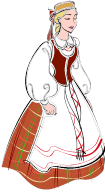 For my birthday recently, my son and daughter-in-law gave me a sølje, a type of jewelry pin worn with a traditional Norwegian costume, the bunad. They thought I should have one of these beautiful pieces of artwork prior to my trip to Norway this summer. This gift prompted me to do a little research on the bunad.
I turned to the Viking magazine, a publication of the Sons of Norway organization. They ran a feature article on the bunad in the May, 2013 issue. According to this article, the bunad is worn on festive occasions and consists of a complete outfit. Each region, valley, or town has its own style, and there are over 450 types of bunads in Norway. Not everyone owns one because they are very expensive and are worn only once or twice a year.
To identify the style of bunad my family should wear, I needed to identify my specific ancestral area. So, what exactly is my ancestral area? I thought it was the Bø municipality of Nordland. Then my husband/tech adviser spent his lunch hours in April and May searching the online Norwegian archives to verify this. He found that my family lived in fishing villages all over Nordland–Vesterålen, Lofoten, and Helgeland. Before that (prior to the Napoleonic Wars) they lived in Bergen.
To represent all these areas, I would need a chest full of pins. I have no idea which bunad I should wear.
I probably should not wear one at all. Besides, when would I wear it? In Colorado we do not celebrate Norwegian holidays. I guess I could wear one to weddings, but that would be rather impractical here. A bunad is quite warm, and most weddings occur during the summer. I think I will stick with the jewelry and wear the gift I received.
I am eager to look for other examples of these pins in Norway. Maybe I can find some in the Ringsaker District of Hedmark where my husband’s family lived for hundreds of years. Pins from that locality would be nice gifts for my granddaughters. And maybe I can get a picture of THEIR bunad.
Recognizing a Family’s History of Military Service
 Memorial Day weekend approaches. Not much goes on in Colorado to mark this solemn day. Instead, people use it to kick off the summer season with camping and backyard barbecues.
We prefer to spend the day remembering fallen soldiers and all those who have sacrificed to serve in our country’s military. My family came to the New World in the Great Migration of the 1630’s so we have had ample opportunity to serve in our nation’s wars. In my genealogical research I have identified these from my direct line:
- Revolutionary War: Gershom Hall of Massachusetts, John Day and Robert Kirkham of Virginia
- War of 1812: Benjamin E. Dunbar of Massachusetts
- Creek War: John Carter of Tennessee
- Civil War: Samuel H. Reed of Illinois and Thomas Sherman of Kentucky
- World War II: my Dad
- War on Terror in Afghanistan: my son—a West Point graduate and Bronze Star recipient
I am thankful that none of these brave men suffered injury or loss of life in these wars. We have collateral relatives who did, including Anderson Sherman who suffered from unspecified injuries during the Civil War. Thomas Aaron Reed was gassed in the trenches of World War I. Harold Reed never recovered from the shell shock sustained in the Korean War.
This weekend my Dad and I will visit the grave of another brave veteran, his late brother Staff Sergeant Robert Lloyd Reed, buried at Ft. Logan National Cemetery in Denver. Uncle Bob served in the Army Air Corps in World War II and later in the Air Force in Korea and Vietnam.
My daughter-in-law, an Army veteran herself, wants her children to know and appreciate why we commemorate Memorial Day. Maybe they will come along with us. Whether they do or not, I am glad that my grandchildren will understand that the day stands for more than the first day of summer vacation.
Home Maintenance and Genealogy
 How can you do genealogy when you have only short snatches of time available? I found myself in this situation this week. We had workmen at our house installing insulation in the attic. Because my husband/tech advisor stayed home for this fun event, we ended up working on various other home improvement projects together as the men sweated in the attic. I spent my scarce genealogy time working on small tasks and loose ends.
- I finished up my album of cemetery marker photos. I created a decorative cover and added divider sheets between the surnames found in the album.
- On Monday night, after the workmen had gone home for the day, we attended the monthly Computer Interest Group (CIG) meeting. There we listened to a presentation on basic computer skills—operating systems, malware, creating files and folders. The speaker offered some helpful tricks and tips. We left early when a Microsoft Office tutorial began. I used to teach this stuff myself.
- This week I received word that my cousin has a new great-grandson. He has a very unusual name, Atom. Yes, Atom. I added him to my database.
Not a lot of progress, but sometimes other things demand attention. Next week? Well, as much as I would like to prioritize genealogy, I do have an inspection of this week’s work scheduled for next Thursday. There goes another morning. Perhaps I can find yet another small genealogy task for that day.
Busy As Bees on Our Genealogy
 We have had a lot going on in our genealogy world over the past week:
- On Saturday, I attended the spring seminar put on by the Colorado chapter of the Palatines to America http://www.palam.org/colorado-palam-chapter.php. Kory Meyerink of ProGenealogists spoke on various topics. As always, they had a good turnout for this seminar. The gentleman sitting next to me traveled all the way from Tulsa, OK. I feel so privileged to live in a city where seminars of this high quality occur regularly.
- On Tuesday, the Germanic Genealogical Society of Colorado held its monthly meeting at the Denver Public Library. We heard a presentation by our own Joe Beine who runs the Online Searchable Death Indexes & Records website http://www.deathindexes.com/ and the German Roots website http://www.germanroots.com/. These are wonderful genealogical resources.
- All week long, my husband/tech advisor has doggedly used his lunch hours to search for my Norwegian roots. He has now learned that they lived all along the coastline of Nordland and Helgeland. But even more surprising, many of them lived in the Bergen area before that. No way can we visit every site during our trip to Norway next month. The poor man is now busy re-routing our driving trip to enable us to visit as many of these new areas as possible. Meanwhile, I have been entering his data into my software program as fast as I can.
Whew!
A Nordland Hiatus
 Here it is already May, and I am still not quite finished tagging and scanning all my cemetery photos. Will I ever get these posted to my website and to FindAGrave http://www.findagrave.com/? It seems like I have been working on this project forever, and I feel like I should be further along.
Now, I find myself needing to suspend the project for the next seven weeks while I prepare for my trip to Norway. This probably will be my only chance to travel in the area where my family lived, and I want to see every family-related site that I can. I hope to see the farms where they lived and to find their gravesites, if they still exist. That means I must know where those sites are.
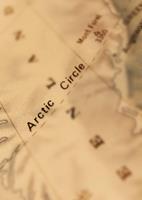
All these people lived in Norway’s coastal Nordland district, north of the Arctic Circle. They were cod fishermen. My husband/tech advisor has valiantly used his lunch hour recently to chase down information on them. He has pursued nearly every line, some back to the 1600’s.
Next I must analyze the records my husband has located. I want to create lists of their farms and churches and plot them onto maps. Armed with these, we will rent a car to drive around Nordland and visit as many spots as we can.
I am beginning by sorting the genealogical documents into generations. My great-grandparents, Ole and Sofie (Siverstdatter) Bentsen, who immigrated to America but were born and married in Norway, are Generation A. Their parents, Karen Marie Johansdatter, Lorents Nicolai Möller Andersen Bentsen, Martha Karoline Dorthea Hansdatter, and Sivert Knudsen, are Generation B. I will work backwards in time through all the generations my husband has identified. I will add every location mentioned on a document to our travel map.
It looks like I have quite a bit of map plotting to do. My husband has noticed that these folks did not stay in the same place. Rather than occupying an ancestral home, they lived all over the islands in western Norway (Vesterålen and Lofoten). My maps will show many anticipated stops. To make the most of my trip to the area, I need to take preparation time away from my photo project.