Archive for the ‘Genealogy’ Category
A New Branch of the Tree
 August 26th, 2021 |
  Author:
  A genealogical discovery upended my research plan for the summer. This month a couple of DNA tests revealed the identity of my previously unknown great-grandfather.
Of course, I dropped everything else to do some research on him. He lived much of his life in the 20th century and left many records:
- U. S. census. I found him for every decennial, but his first appearance, in 1860, was not straightforward. He lived with his maternal grandfather that year and was listed with that surname, not his own.
- Newspapers. My ancestor homesteaded in Hayes County, Nebraska. The local papers have been digitized and are available on Newspapers.com. His name appears several times when he bought or sold land and engaged in political activities. He had on obituary which says nothing about my grandmother.
- Land records. This man long was a candidate for my great-grandfather because he had legal dealings with my great-grandmother, Laura Riddle (1853-1933). He served as a witness for her homestead application, and he bought land from her. He lived next door.
- FindAGrave.com. This website links my ancestor to other members of his family. This gives me a roadmap to follow in searching for primary sources about him and his parents.
My next step is to follow up on those clues and locate some original records. This week I submitted to the State of Nebraska an application for my ancestor’s 1925 death certificate. I hope it includes the names of his parents to confirm the information on posted on FindAGrave.
The newspaper carried a notice of petition for probate of his estate, so I will contact Hayes County for a copy of that file. As far as I know, he never acknowledged or supported my grandmother as his daughter, but I will not know for sure until I look at his probate case to see if it mentions her.
My ancestor had a homestead, and I need to request a copy of his file. Did my great-grandmother reciprocate by serving as a witness for him? Were women allowed to do that in the 1890’s?
All this leaves me with a big unanswered question. Should I contact my ancestor’s other descendants, the half cousins whose DNA we match? They may not know that we even exist. Have they looked at their match lists and wondered who we are and how we are related?
This out-of-wedlock event took place in 1895-96, a long time ago. Perhaps enough time has passed for the shock such news creates to be softened.
I would love to know whether my grandmother looked like her father’s family. I long to ask them for a copy of a photo of him if they have one. I was thrilled to find a portrait of my dad’s half-cousin posted on his FindAGrave site, and I thought I could see a family resemblance between him and some of my grandmother’s children.
My newly found ancestor holds the key to 12.5% of my heritage. Filling in this blank space on my family tree is so satisfying.
 Posted in
Re-living My Childhood
 Last week my husband/tech advisor and I took a vacation to the Black Hills of South Dakota. We stayed in a cabin in Custer State Park. I had not been to that region in a couple of decades.
The area just north of there used to be familiar territory for me because my grandparents lived in Rapid City. My parents were married there, and I was baptized there. My family spent a week or two there most summers.
We would take in all the local sites during those visits—Mt. Rushmore, Storybook Island, Reptile Gardens, Dinosaur Park, Canyon Lake, and Keystone. I took my first and only helicopter ride when I was a young teenager.
On this trip we stayed in the Custer area, not Rapid City. We drove all around the park and saw bison, wild turkeys and donkeys, deer, vultures, and a coyote. One day we hiked around Sylvan Lake. Another day we looked at the stockade on French Creek near where gold was discovered in 1874.
Visiting the Black Hills again brought back many good memories of childhood vacations. My family is all gone from that area now, so I do not get there often. I am glad I had the chance to visit that beautiful area again this year.
Genealogy Databases Reveal a Life
 Genealogical research has changed since the last century. More and more information continues to be available online. Nowadays I can fill my days doing research from home.
For my recently discovered turn-of-the-last century ancestor, I have been amazed at the amount of information I could collect about his life in a short time without leaving the house or mailing a letter to the county. A few databases contain enough information for me to create a good profile of his life:
- FindAGrave.com. My ancestor’s cemetery marker has been photographed and posted here. Someone added biographical information and links to monuments for a parent and a child.
- Ancestry.com. Here I found both state and federal census records that offer my ancestor’s place of residence and the composition of his household.
- Newspapers.com. This site has a searchable collection of county newspapers from my ancestor’s lifetime. I learned a bit about his daily life from news items describing his travels, land transactions, and political activities. I also found his 1925 obituary.
- Glorecords.blm.gov. The Bureau of Land Management’s general land office records give me access to my ancestor’s homestead file and tell me the location of some of the land he owned.
In days gone by, I would have needed to write numerous letters and visit repositories, courthouses, and cemeteries to gather this much data. It would have taken months.
Today, once this man’s identity was discovered through a DNA test (another technological advance in itself), I was able to use 21st century technology to compile a tremendous amount of information about him in just a few days.
The Mystery Man and the DNA Test
 Well, well, well. That famous genealogy serendipity has struck again.
As I pondered taking an Ancestry DNA test seeking a match to the family of the Irish widower I suspect to be my great-grandfather, I received an e-mail from a sibling.
Guess who just took a DNA test at Ancestry? Guess who has a close DNA match to the great-grandsons of the Irish widower?
I think we have found the ancestor whose identity remained hidden for 125 years. An ancestor from whom my sibling and I each receive 12.5% of our DNA.
I can finally begin to fill in that huge empty space on my family tree. I have a lot of research to do.
A Step Closer to the Mystery Man
 The identity of my great-grandfather remains unknown. Grace Riddle Reed (1896-1976), “Grandma Grace”, was born to her single mother Laura Riddle (1853-1933) on a homestead near Palisade, Nebraska. Grandma claimed not to know who her father was, and if other family members did know, they weren’t talking.
Over the years I have scoured the Nebraska records looking for a clue to the man’s identity. The kind folks at the genealogy center in McCook finally counseled that my best hope is probably a DNA match.
As I have waited for that, I have assembled some evidence that might help when a match arrives, if it ever does:
- Laura acquired government land three times between 1885 and the early 1900’s. These transactions coincide with the time during which Grandma Grace was born. I have assembled the names of all the men who served as witnesses for Laura and to whom she sold land.
- I have created a map of the neighborhood where Laura lived in 1900 and located a census list of the names of the neighbors.
- I continue to analyze my Dad’s DNA matches. His ethnicity estimate includes quite a bit of Irish that I cannot account for in other family lines. One of Laura’s long-time neighbors and associates was an Irish widower, so I constructed a family tree for him, just in case.
Dad’s closest DNA match, other than members of the immediate family, is a Nebraska woman who was born about the same time he was. She was adopted from a foundling home and does not know her birth family. The DNA testing company surmises that she and Dad are second cousins.
Over the years, I have worked with her family trying to identify a common ancestor. We determined that he or she likely lived in the McCook, NE area. We tentatively eliminated the woman’s maternal line based on some bare-bones information from her birth certificate. This left us to focus paternal lines, perhaps my mystery man’s.
Last week the family contacted me again. They have a new DNA match, and they wanted to know if I recognized the surname. I did!
The Irish widower had grandchildren with that name.
After my initial excitement, I took stock of where we stand now. The purported second cousin has a DNA match to someone with the same surname as the Irish widower’s family. The location and timelines work out to support kinship with him. If we, too, are related to that same Irish family, the woman and Dad would be first cousins once removed, a similar degree of relationship as second cousin.
I checked Dad’s DNA match lists again and was disappointed that no one with the newly-identified surname appears there. I need to ask the woman’s family which testing company showed their new match.
Could it have been on Ancestry? We have no test results on file there. That company twice rejected Dad’s saliva sample.
I have not tested there. Maybe it is time I did. They are a bigger pond to fish. Perhaps members of the Irish widower’s family are in their database. The only problem is that I am another generation removed from our mystery ancestor and less likely to have a meaningful match.
Still, it is worth a try. If I, too, could show a DNA match with the family of my great-grandmother’s Irish friend, the mystery would be solved.
The Return to In-Person Meetings
 Since early last year, our local genealogical and lineage societies have met virtually on Zoom. This summer, many that I belong to will meet in person for the first time in many months.
- Colorado Genealogical Society. Next week the Lunch Bunch from this group will gather at a Mexican food restaurant to eat together for the first time since the pandemic began. Regular meetings of the Society will continue on Zoom at least until the remodeling project at the Denver Public Library is completed several months from now. Once the library reopens, this group may continue to have some guest speakers appear on Zoom because many members and speakers like the convenience of participating from home. The Board has decided to continue using Zoom for its meetings to avoid arranging for meeting space and to enable people who live further away to serve on the Board.
- General Society of Mayflower Descendants, Colorado Chapter. Last weekend we all enjoyed the annual summer picnic at Castlewood Canyon State Park. This picnic normally takes place at the U.S. Air Force Academy in Colorado Springs, but that facility remains closed to the public. The state park provided us with a lovely setting overlooking the canyon. My husband/tech advisor and I hiked the nature trail along the rim when the picnic ended.
- Highlands Ranch Genealogical Society. This group normally meets at the local Family History Center, but that facility has not yet re-opened. This Society has no summertime meetings.
- Sons of Norway. We already met in person for a picnic in May will do so again in August. This group just received word that our Lutheran church meeting place is open again for our monthly Lodge meetings. The first one of those will be in September. I serve on the SofN Board, and I hope those meetings will continue on Zoom. The genealogy study group has decided to remain on Zoom to make it easier for people from other Lodges to join in.
As the pandemic ebbs, the genealogy world will look a little different. We have learned that we need not hold all meetings in person to remain viable.
I hope these clubs can find a balance between virtual and in-person meetings. Virtual meetings offer convenience and the opportunity for faraway people to participate. They eliminate the need to schedule and pay for meeting rooms. They save on commute time.
Face-to-face meetings enable us to build and maintain personal connections. Many people join genealogical and lineage societies because of the social opportunities they provide. We do not want to lose that.
Our group leaders have a new tool in virtual meetings, and they must use it wisely as our nation reopens. A good mix would be nice.
Hosea Dunbar, a Collateral Relative
 As always, I am working backwards in time to unravel the threads of the life of Benjamin E. Dunbar (1776-1831), my fourth great-grandfather. The time has come to branch out and look at the lives of his family members.
Our family history The Descendants of Robert Dunbar of Hingham, Massachusetts by Ann Theopold Chaplin tells us that Benjamin E. was the son of Benjamin Dunbar and Hannah Hathaway. He had a brother Hosea, born in 1777. Their father died by 1779.
The first and most obvious family member to look at next is Hosea to see if any additional information on their family will turn up.
So far, I have found nothing more about their parents, but I have learned more about Hosea’s life. The information given in Chaplin’s book is incomplete.
Hosea, like Benjamin E., was born in Halifax, MA. He married Rachel White in Vermont in 1806. They had six children:
- Joseph (1807-1886)
- Hannah (1809-1883)
- Hosea jr. (1812-?)
- Walter (1816-1895)
- Benjamin (1819-1901)
- John L. (1824-1892)
The Dunbar book relates that they migrated from Vermont to New York. It says some of the children went on to Lenawee County, Michigan.
The obituary for John L. Dunbar completes the story. He was born at Fort Ann, New York. His family moved on to Niagara County, NY when John was still a child. When he was 15 (about 1839), he and his parents settled in Fairfield, Lenawee County, Michigan. There they remained. Hosea died in 1849 and Rachel in 1855.
Long ago I had located these Dunbars on the U.S. census and wondered whether they were related to my branch of the family. Now I know that they were.
They lived two counties apart, Benjamin E.’s family in St. Joseph County and Hosea’s family in Lenawee County. Did they know each other?
Benjamin E. had died in Ohio in 1831, long before some of his children went to Michigan in 1849 (the same year Hosea died). Hosea had traveled a separate way through the years first to Vermont and New York before landing in Michigan. How likely is it that the families kept in touch, especially after Benjamin E. passed away? Did Benjamin E.’s children and grandchildren in Mendon realize that the Dunbars in Fairfield were their cousins?
I will never know. It has been interesting to learn that many of Benjamin and Hannah’s descendants settled in the same area near the Great Lakes. Was this a coincidence?
Hosea’s family has not told me anything new about the Dunbar family in Halifax. When I finish posting all his information I will need to turn to other family members in the search for more information.
Three Phases of a Dunbar Life
 Benjamin E. Dunbar (1776-1831), my third great-grandfather, lived in three distinct locations. To fully document his life, I need to search for records from his years in all three places.
I have worked backwards in time to accomplish this:
- Stow, Ohio. Benjamin and his family relocated to this area near Akron towards the end of his life. After appearing on the 1830 U.S. census in Massachusetts, they moved west. Benjamin died not long afterwards, in 1831. He is buried in Stow. The only records of him in this place are a partial probate file and a cemetery marker. Subsequent records of his family mention him only by name with no further identifying information.
- Chatham, Massachusetts. Benjamin first appears in the records here about 1804 when he purchased some land. The town history tells us he owned a salt works. He married Rhoda Hall, and after some years they converted from Congregational to the Methodist denomination. Over a period of 25 years or so, Benjamin regularly participated in Chatham town meetings. The meeting minutes mention him serving the town in various capacities. He took part in militia duty during the War of 1812.
- Halifax, Massachusetts. A Dunbar family history, The Descendants of Robert Dunbar of Hingham, Massachusetts by Ann Theopold Chaplin, includes Benjamin E. Dunbar. It says he was the son of Benjamin Dunbar and Hannah Hathaway of Halifax. This week I began looking for Halifax records for him.
The Halifax research is vital in documenting my ancestor’s life and placing him with the correct birth parents. The lineage in the Dunbar history differs from the one given on many online trees. They say his mother was Hannah Latham, not Hannah Hathaway. Who is correct?
If the Dunbar history is accurate, Benjamin E.’s father, Benjamin Dunbar (1749-bef. 1779), died when young Benjamin was just a toddler. Hannah was the second wife. The father had previously been married to Ruth Pratt.
Delving deeper into the Dunbar history, I created a rudimentary family tree from the genealogical information provided. With it in mind, I can recognize records of collateral family members as I search for records of Dunbars in Halifax. The tree will help me sift out those for my direct family.
When I had the tree finished, I began a search on American Ancestors (https://www.americanancestors.org/index.aspx) for records that might mention the early life of Benjamin E. Dunbar.
I found no will for his father.
I did locate a will for a man the Dunbar genealogy says was Benjamin E. Dunbar’s grandfather. Joseph Dunbar (1702- bef. 1782) outlived a son Benjamin and left a Halifax will providing a portion to the children of his deceased son. Unfortunately, these children are not listed by name. I cannot be certain that Benjamin E. Dunbar was one of the heirs of Joseph Dunbar.
I need more information to tie my generations together. I also hope to determine whether Hannah was a Hathaway or a Latham.
What will additional research in the Halifax records reveal?
Thinking of Dad
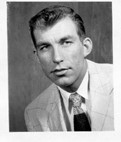 Father’s Day approaches. According to Wikipedia, this holiday honors fatherhood and other paternal bonds as well as the influence of fathers in society. Father’s Day is also big business.
We did not always have this holiday. As an official celebration in the United States, Father’s Day celebrations came rather late. When a daughter-in-law once asked me what we did for Father’s Day when I was young, I could not recall doing anything to mark the day.
I wondered why.
I learned that the holiday day was first proposed in the early twentieth century as a complement to Mother’s Day. At the beginning, it had little success because Americans perceived it as an attempt by retailers to promote greeting cards and gifts.
Not until 1966 did a U. S. President, Lyndon B. Johnson, issue a presidential proclamation honoring fathers. The official holiday came during the next presidential administration when Richard Nixon signed a law in 1972 making it a permanent national holiday.
No wonder we did not celebrate this day when I was young. No one did. My siblings and I were pretty much grown when it came along.
Now, on this Father’s Day, my own dad is gone. I cannot present him with a card or gift. I can honor his memory, though.
He was a good father despite having had no role model for the task. His own dad had died when my father was small, and Dad had few memories of him.
Despite that, my dad became an admirable father. He was kind and nurturing. He did not criticize, and he encouraged me to do my best. He was generous with his time and treasure. He taught me to whistle.
On Father’s Day this year, I can think of him and all he did for me. I miss him.
Death Cleaning the Office
 The Swedes have a tradition called Death Cleaning. Older adults are supposed to purge their belongings so their children will not have to do it.
Now that I have reached a certain age, I have begun this task.
In my home office, I am taking a multi-prong approach:
- I have all the back issues of journals and magazines for my numerous genealogy clubs, dating back to the 1990’s. I do not refer to them very often. This summer I began going through these one-by-one, saving only helpful articles, and discarding the rest of each issue. I know I could scan the articles I want, but I like paper.
- Several years ago, my second cousins passed on to me their aunt’s genealogical library. She had collected material on not just our ancestors but also collateral relatives. I continue identifying new homes for books I do not need. Just yesterday a sent a genealogy on the Hanner family to a different second cousin who was thrilled to have it.
- My filing cabinets overflow. I need help with clearing out old files, reorganizing what I keep, and shredding the rest. My 9-year-old grandson will come over to help with this when he returns from camp later this month. He tells me he charges $5 per hour. A bargain, I would say. Maybe, in addition to earning some money, he will learn a little about his family history.
I hope my office will house less paper and fewer books by the end of the summer. I do admit that despite this effort, I may leave behind a monumental number of notes and reference books. But this summer’s death cleaning project is a start.