Author Archive
Which is MY Bunad?
 June 6th, 2013 |
  Author:
 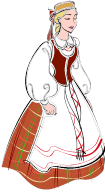 For my birthday recently, my son and daughter-in-law gave me a sølje, a type of jewelry pin worn with a traditional Norwegian costume, the bunad. They thought I should have one of these beautiful pieces of artwork prior to my trip to Norway this summer. This gift prompted me to do a little research on the bunad.
I turned to the Viking magazine, a publication of the Sons of Norway organization. They ran a feature article on the bunad in the May, 2013 issue. According to this article, the bunad is worn on festive occasions and consists of a complete outfit. Each region, valley, or town has its own style, and there are over 450 types of bunads in Norway. Not everyone owns one because they are very expensive and are worn only once or twice a year.
To identify the style of bunad my family should wear, I needed to identify my specific ancestral area. So, what exactly is my ancestral area? I thought it was the Bø municipality of Nordland. Then my husband/tech adviser spent his lunch hours in April and May searching the online Norwegian archives to verify this. He found that my family lived in fishing villages all over Nordland–Vesterålen, Lofoten, and Helgeland. Before that (prior to the Napoleonic Wars) they lived in Bergen.
To represent all these areas, I would need a chest full of pins. I have no idea which bunad I should wear.
I probably should not wear one at all. Besides, when would I wear it? In Colorado we do not celebrate Norwegian holidays. I guess I could wear one to weddings, but that would be rather impractical here. A bunad is quite warm, and most weddings occur during the summer. I think I will stick with the jewelry and wear the gift I received.
I am eager to look for other examples of these pins in Norway. Maybe I can find some in the Ringsaker District of Hedmark where my husband’s family lived for hundreds of years. Pins from that locality would be nice gifts for my granddaughters. And maybe I can get a picture of THEIR bunad.
 Posted in
Some Take-Aways from a High-Definition Genealogist
 The High-Definition Genealogist, Thomas MacEntee, presented a one-day seminar at the Denver Public Library over the weekend. I enjoyed his talks and came home with some good ideas to pursue:
- Work to become less isolated by pursuing more genealogy networking opportunities. I plan to check out a site he suggested called GenealogyWise at http://www.genealogywise.com. I am not a Facebook user, and Thomas says this could be a better alternative for a genealogist,
- Clean up my bookmarks and add some useful ones like Cyndi’s List of Birthdate Calendars & Calculators at http://cyndislist.com/births.htm#Birthdate and Wolfram-Alpha at http://www.wolframalpha.com for historical money and weather,
- Renew my efforts to track my research electronically. I am guilty of maintaining paper research logs that date back over thirty years. I need set up some spreadsheets and to make better use of the task feature in The Master Genealogist software,
- Decide whether and when to share my information on compiled trees at WikiTree (http://www.wikitree.com) or Family Search, and
- Document my goals and results. I like doing the research, but I tend to be lazy about writing up my results. I prepare and distribute a character sketch for one ancestor every Christmas, but I could do more. My husband/tech advisor has some good ideas for writing topics.
As always when I attend a seminar, I find the speaker’s enthusiasm infectious. I want to do all five of these things today! Of course I cannot do that because I am elbow-deep in preparing for a genealogy trip to Norway. So how long can I maintain this energy? We will know in July when I get back.
Recognizing a Family’s History of Military Service
 Memorial Day weekend approaches. Not much goes on in Colorado to mark this solemn day. Instead, people use it to kick off the summer season with camping and backyard barbecues.
We prefer to spend the day remembering fallen soldiers and all those who have sacrificed to serve in our country’s military. My family came to the New World in the Great Migration of the 1630’s so we have had ample opportunity to serve in our nation’s wars. In my genealogical research I have identified these from my direct line:
- Revolutionary War: Gershom Hall of Massachusetts, John Day and Robert Kirkham of Virginia
- War of 1812: Benjamin E. Dunbar of Massachusetts
- Creek War: John Carter of Tennessee
- Civil War: Samuel H. Reed of Illinois and Thomas Sherman of Kentucky
- World War II: my Dad
- War on Terror in Afghanistan: my son—a West Point graduate and Bronze Star recipient
I am thankful that none of these brave men suffered injury or loss of life in these wars. We have collateral relatives who did, including Anderson Sherman who suffered from unspecified injuries during the Civil War. Thomas Aaron Reed was gassed in the trenches of World War I. Harold Reed never recovered from the shell shock sustained in the Korean War.
This weekend my Dad and I will visit the grave of another brave veteran, his late brother Staff Sergeant Robert Lloyd Reed, buried at Ft. Logan National Cemetery in Denver. Uncle Bob served in the Army Air Corps in World War II and later in the Air Force in Korea and Vietnam.
My daughter-in-law, an Army veteran herself, wants her children to know and appreciate why we commemorate Memorial Day. Maybe they will come along with us. Whether they do or not, I am glad that my grandchildren will understand that the day stands for more than the first day of summer vacation.
Home Maintenance and Genealogy
 How can you do genealogy when you have only short snatches of time available? I found myself in this situation this week. We had workmen at our house installing insulation in the attic. Because my husband/tech advisor stayed home for this fun event, we ended up working on various other home improvement projects together as the men sweated in the attic. I spent my scarce genealogy time working on small tasks and loose ends.
- I finished up my album of cemetery marker photos. I created a decorative cover and added divider sheets between the surnames found in the album.
- On Monday night, after the workmen had gone home for the day, we attended the monthly Computer Interest Group (CIG) meeting. There we listened to a presentation on basic computer skills—operating systems, malware, creating files and folders. The speaker offered some helpful tricks and tips. We left early when a Microsoft Office tutorial began. I used to teach this stuff myself.
- This week I received word that my cousin has a new great-grandson. He has a very unusual name, Atom. Yes, Atom. I added him to my database.
Not a lot of progress, but sometimes other things demand attention. Next week? Well, as much as I would like to prioritize genealogy, I do have an inspection of this week’s work scheduled for next Thursday. There goes another morning. Perhaps I can find yet another small genealogy task for that day.
Busy As Bees on Our Genealogy
 We have had a lot going on in our genealogy world over the past week:
- On Saturday, I attended the spring seminar put on by the Colorado chapter of the Palatines to America http://www.palam.org/colorado-palam-chapter.php. Kory Meyerink of ProGenealogists spoke on various topics. As always, they had a good turnout for this seminar. The gentleman sitting next to me traveled all the way from Tulsa, OK. I feel so privileged to live in a city where seminars of this high quality occur regularly.
- On Tuesday, the Germanic Genealogical Society of Colorado held its monthly meeting at the Denver Public Library. We heard a presentation by our own Joe Beine who runs the Online Searchable Death Indexes & Records website http://www.deathindexes.com/ and the German Roots website http://www.germanroots.com/. These are wonderful genealogical resources.
- All week long, my husband/tech advisor has doggedly used his lunch hours to search for my Norwegian roots. He has now learned that they lived all along the coastline of Nordland and Helgeland. But even more surprising, many of them lived in the Bergen area before that. No way can we visit every site during our trip to Norway next month. The poor man is now busy re-routing our driving trip to enable us to visit as many of these new areas as possible. Meanwhile, I have been entering his data into my software program as fast as I can.
Whew!
A Nordland Hiatus
 Here it is already May, and I am still not quite finished tagging and scanning all my cemetery photos. Will I ever get these posted to my website and to FindAGrave http://www.findagrave.com/? It seems like I have been working on this project forever, and I feel like I should be further along.
Now, I find myself needing to suspend the project for the next seven weeks while I prepare for my trip to Norway. This probably will be my only chance to travel in the area where my family lived, and I want to see every family-related site that I can. I hope to see the farms where they lived and to find their gravesites, if they still exist. That means I must know where those sites are.
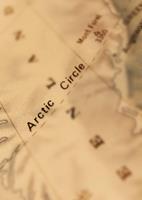
All these people lived in Norway’s coastal Nordland district, north of the Arctic Circle. They were cod fishermen. My husband/tech advisor has valiantly used his lunch hour recently to chase down information on them. He has pursued nearly every line, some back to the 1600’s.
Next I must analyze the records my husband has located. I want to create lists of their farms and churches and plot them onto maps. Armed with these, we will rent a car to drive around Nordland and visit as many spots as we can.
I am beginning by sorting the genealogical documents into generations. My great-grandparents, Ole and Sofie (Siverstdatter) Bentsen, who immigrated to America but were born and married in Norway, are Generation A. Their parents, Karen Marie Johansdatter, Lorents Nicolai Möller Andersen Bentsen, Martha Karoline Dorthea Hansdatter, and Sivert Knudsen, are Generation B. I will work backwards in time through all the generations my husband has identified. I will add every location mentioned on a document to our travel map.
It looks like I have quite a bit of map plotting to do. My husband has noticed that these folks did not stay in the same place. Rather than occupying an ancestral home, they lived all over the islands in western Norway (Vesterålen and Lofoten). My maps will show many anticipated stops. To make the most of my trip to the area, I need to take preparation time away from my photo project.
A Hjelmstad Photo Op
 Our patriarch “Grandpa” Al Hjelmstad (from North Dakota) met his wife Thecla Walz (from Minnesota) in the oil town of Casper, Wyoming. They had both just arrived there looking for temporary work after World War II. He planned to earn money to move on and start a business in the Pacific Northwest. She wanted to spend the summer after high school with her sister. They ended up marrying and staying in Casper to raise their family.
Today most of their descendants live along the Rocky Mountain corridor. Last weekend nearly all of us gathered at the home of a grandson in Pueblo, Colorado for an impromptu reunion. People came south from Casper and north from Las Alamos, New Mexico. One outlier even arrived from Ithaca, New York. We had 4 generations represented ranging in age from 2 months to 83 years. Of course meeting the 2-month-old little girl was the excuse for the get-together.
My daughter-in-law is learning photography so she took many pictures of this event, including some group photos. Now she wants a place to post them for all the clan to see.
Many (most!) of us are not Facebook users, so this could pose a problem. But my husband/tech advisor can solve this! He will use Photo Gallery software to create a family album online where we all can post and share photos. This will work well for the Hjelmstads who shy away from social networks.
As a genealogist, I love that we have another multi-generational photo to add to the collection. I just wish Grandpa were still with us to see how the family grows.
An Adventure in Norwegian Research
 My husband works with computers all day, so what do you suppose he does during his lunch period? Works on computers!
This quirk of his personality worked to my benefit this week. In anticipation of our trip to Norway, during his lunch hour over the past several weeks he has researched his family using the Norwegian online archives http://arkivverket.no/eng/Digitalarkivet. When he could find no more information on his family, he offered to look for mine!
I had complete information only for my great-grandparents, Ole Bentsen and Sofie Sivertsdatter, who immigrated to the U.S. in 1905. Using the online archives, I had located baptism, confirmation, and marriage records for them and their siblings. I had confirmed the names of their parents (Lorents Nicolai Bentsen, Karen Johansdatter, Sivert Knudsen, Martha Hansdatter) as given to me by their daughter. These records told me that prior to immigration, my family had resided on various farms in the Vesterålen district of Nordland County, Norway. I hoped to visit these farms, the same way we will visit my husband’s farms in the Ringsaker District of Hedmark County.
Before the trip, he wanted to identify my earlier generations and whether they had lived in the same places in Nordland. Soon he found that my family research presented difficulties he had not faced with his. The Hedmark records had been indexed; Nordland had not. Hedmark records went back further in time than the Nordland records. And then there were the farms.
Not really farms at all in Vesterålen, but rather geographic areas of administrative convenience, my family’s residences turned out to be fishing villages on remote islands. My husband came marching into the house after work one evening and announced that we would not be visiting my family “farms” because we have no way to get there. Even the ferries do not stop at many of these places. I will have to be content with visiting the main islands of Vesterålen.
I appreciate all the work my husband did to advance my research. For his sake, I wish it were easier. Now, he should take a break and find something relaxing to do at lunchtime.
Boomer or Xer?
 During a conversation with my daughter-in-law this week, the term “Generation X” came up. This phrase refers to a particular cohort of people born immediately after the Baby Boom, roughly from 1964 to 1980.
Several theories for the origin of the term “Generation X” exist. Some claim they named it after a popular punk band. Another hypothesis has greater appeal for me as a genealogist. According to the idea I like most, the “X” stands for the Roman numeral ten. This explanation assumes that “Generation X” refers to the tenth generation of Americans.
I like this interpretation because it places me into the relatively youthful Generation X instead of the older Baby Boomer generation! I am among the 10th generation of my family to live in America. My earliest American ancestors, John Hall and Edward Bangs, lived ten generations back in the 1630’s Massachusetts Bay Colony.
The only problem with calling myself a member of Generation X is that no one else in popular culture actually defines the generations this way. Imagine how confusing these terms would be if we all had to count back the generations on our family trees to find out which generational label applies to us. People of the same age would belong to different generations, and the terms would become meaningless. It is more practical to define terms according to commonly-accepted ranges of birth years.
So, to the world, I remain a Baby Boomer. But in my heart I know that I am a proud member of the younger Generation X.
Not What I Expected From an Obituary
 Last week I wrote about a new source I had discovered, the Ohio obituary index published by the Rutherford B. Hayes library. I searched online for members of my Dunbar family who had lived in Ohio beginning in the early 1830’s. There I found a listing for my great-great grandmother’s sister, Rebecca Dunbar. The index referenced her 1874 obituary in the Akron Daily Beacon.
This week I contacted the Akron library via e-mail to secure a copy of this obituary. They responded the same day with an electronic copy of the article I wanted. I love this superb service available from libraries around the country.
Unfortunately, the article turned out to be simply a death notice, not an obituary. To me, an obituary contains some biographical information.
This article had no family information. It stated only that Miss Rebecca Dunbar had passed away on December 30, 1873 in Stow. Interestingly, it offered her cause of death as inflammation of the bowels. I already had most of this information from other secondary sources.
I believe that anyone using this source should know that calling it an “obituary index” is something of a misnomer. Particularly for 19th-century entries, the article likely will be a short death notice instead of an obituary detailing the person’s life and family. Valuable information, but not complete information.