Hunting for Mayflower Ancestors
 January 2nd, 2020 |
  Author:
 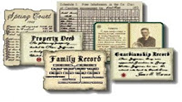 With the new year comes a new genealogy project. After spending last year on foreign research in Finnish records, I will turn my attention closer to home in 2020.
My father had deep American roots. His mother’s family lived in New England a couple of centuries ago, and I want to find out more about them. I am hoping to prove a line or two of Mayflower ancestry.
Dad’s direct maternal line offers me a chance. According to a post on WikiTree, his third great-grandmother, Lucy Snow, descended two ways from Mayflower passenger Stephen Hopkins. The lines go this way although no sources are cited:
Lucy Snow>Hannah Lincoln>Hannah Hopkins>Stephen Hopkins>Stephen Hopkins>Giles Hopkins>Stephen Hopkins
Lucy Snow>Thomas Rogers Snow>Nathaniel Snow>Edward Snow>Jabez Snow>Constance Hopkins>Stephen Hopkins
My first stop searching for proof of this ancestry has been the databases on the American Ancestors website (https://www.americanancestors.org/index.aspx). There I located documentation for the births and marriage of Lucy’s parents. Lucy herself is not mentioned so I have nothing to link her to them. I need to find some proof of her parentage.
I also need to find some proof that Lucy was the mother of my known ancestor Rhoda Hall. I have only cemetery information saying she was the first wife of Gershom Hall. I believe Rhoda Hall Dunbar, Dad’s second great-grandmother, was the daughter of Lucy and Gershom.
My next task will be to link up the three women. If I can find documentation for the relationship Rhoda Hall>Lucy Snow>Hannah Lincoln and Thomas Snow, I will have my Mayflower ancestry from Stephen Hopkins. Then I can turn my attention to learning whether I descend from any other Mayflower passengers. Many people who descend from one Mayflower passenger also descend from others.
New England family lines have been well-documented. I think proving a line of Mayflower descent, if I have one, should be doable this year. This project will offer me an interesting genealogical year.
 Posted in
Joulupukki
 When I was a girl, Santa delivered each of us kids a special gift on Christmas Eve. He would ring the front doorbell and leave it on the porch shortly after we finished our traditional Christmas Eve meal of ham and potato salad.
I thought everyone celebrated the holy night this way. Only after I grew up did I learn that we probably followed an Americanized version of a Finnish Christmas tradition that my mom had learned from her immigrant grandparents.
The Finnish Santa is called Joulupukki. He dresses not in red velvet but in fur. He bears gifts to children in Finnish homes on Christmas Eve. Instead of sliding down a chimney after they go to bed, he knocks on doors during waking hours and asks whether any good children dwell there. All the well-behaved youngsters receive a gift from him. In appreciation, they sing carols.
Usually, we in our American household did not see Santa/Joulupukki in person on Christmas Eve. My mom explained that he was in too much of a rush to wait for us to answer the door. He simply dropped off our gifts and hurried on.
This year, I was re-introduced to Joulupukki when he attended our local Finnish Christmas party. We welcomed him with a traditional song (https://www.youtube.com/watch?v=r7HorrUBmTs). Then he presented gifts to all the good children, but none of my own grandchildren were there. This got me thinking.
I decided to resurrect the idea of Joulupukki in a small way for my family this Christmas. I signed some of my gift tags with “Joulupukki” instead of “Gran and Granddad”. Then I waited to see if anyone would notice.
Our eldest granddaughter, a 16-year-old, asked about the unfamiliar tag. That question gave me an opening to explain about Joulupukki and to share a bit of my (their!) Finnish heritage.
I tried, but the grandchildren did not seem very interested in this tradition when so much other gift-giving went on around them. Even so, they have now heard the story. They may remember it if I decide to have Joulupukki make another visit next year.
These children, just 6.25% Finnish, know so little of the traditions their family brought from the old country. Much was lost in my grandparent’s determination to become American. Perhaps I can use the story of Joulupukki to reclaim some of what we have forgotten and pass it along.
DNA Testing and the Law
 Every month I attend a community meeting where various guest speakers come to talk about issues of local concern.
This week our Sheriff spoke about county law enforcement issues. One topic caught my attention. He mentioned using DNA to solve long-unsolved homicides. His cold case unit has gone beyond matching crime scene DNA with a suspect identified through normal police work.
This month his department solved a 1980 homicide by tracking and identifying a suspect solely through DNA testing. They analyzed DNA taken from the crime scene and uploaded it into a genealogy database. They looked for matches and identified a suspect.
The department tracked the man, who now uses an alias, to Florida. Law enforcement there put him under surveillance, followed him to a local bar, and took the glass he used. DNA testing on the glass matched that taken in the case by investigators in 1980. The suspect was arrested and extradited to Colorado.
Although it is wonderful to see this man being brought to justice at long last, I am not sure I like the idea of using genealogy databases for law enforcement purposes.
Much discussion has taken place around this debate in recent months, and I will not repeat it here. I just know that I do not want my DNA being used to entrap my relatives.
At the only company where I have taken a DNA test, FamilyTreeDNA, I have opted not to have my DNA used this way. I made the same selection for the other kits that I manage at this company.
I provided our DNA to the testing companies to further our family history, not to take part in police sting operations. I hope the testing companies continue to give us the option to opt out of law enforcement requests for match information.
It is too late to take my DNA sample back from them. I must hope they will continue to use it in the spirit for which it was given, for genealogy only. If the authorities want a DNA database, they could create one themselves using samples from willing participants. Leave me out of it.
Reading for Genealogy
 A genealogist needs to spend time improving skills and keeping up with happenings in the genealogy world. One can choose from both print and online publications for professional reading. These resources provide educational articles, examples of well-written genealogies, and announcements of upcoming events. I subscribe to several journals and blogs that keep me up to date.
In Print
- National Genealogical Society Quarterly. This publication has promoted genealogical scholarship since 1912. Each issue consists of several genealogy case studies that serve as an example of excellent analysis and writing. The Quarterly also reviews recently published genealogy books.
- NGS Magazine. This quarterly magazine includes news articles about the National Genealogical Society. It also contains how-to articles, including columns on using the National Archives and technology.
- The Palatine Immigrant. This periodical covers research on German-Speaking ancestry. It includes book reviews, research articles, a genealogy advice column, and news of upcoming Palatines to America events.
- The Colorado Genealogist. The quarterly publication of the Colorado Genealogical Society focuses on articles and transcriptions of records specific to Colorado.
- The New England Historical and Genealogical Register. This journal of American genealogy publishes current research on New England families and sources.
- American Ancestors. A sister publication to the Register, the magazine covers Society news, program and tour announcements, and articles of genealogical interest.
Online Blogs and Newsletters
- The Legal Genealogist. Judy G. Russell, a lawyer and a genealogist, writes about (what else?) genealogy and the law. https://www.legalgenealogist.com/
- Vita Brevis. The blog of the New England Historic Genealogical Society, it posts essays by the Society’s professional staff. https://vitabrevis.americanancestors.org/
- Eastman’s Online Genealogy Newsletter. Dick Eastman has been covering genealogy news with his online newsletter for 23 years. https://blog.eogn.com/
- DNAeXplained—Genetic Genealogy. Roberta Estes helps us discover our ancestors, one gene at a time. https://dna-explained.com/
- Norwegian Genealogy and then some. Martin Roe Eidhammer writes helpful tips for Norwegian research, and he also offers travelogues and book reviews. https://martinroe.com.godtsagt.dev/blog/
At our house, we also receive one more genealogical publication that comes addressed to my husband/tech advisor. I do not know how much of it he actually reads because Slekt og Data is written in Norwegian. This publication is put out by Norway’s largest genealogy organization.
Most of the blogs I listed arrive in my e-mail In box every day. I can read or skim them in a few minutes. I set aside some time in the late afternoon to read the journals that come by snail mail. The writers who contribute to these publications provide a wonderful educational service to those of us searching for our ancestors.
Cleaning Out the Old; Getting Ready for the New
 This week my husband/tech advisor and I finished up my 2019 genealogy project. I needed his assistance in creating and printing a large chart. After some trial and error, we at last have it ready to mail out to relatives.
Now I have turned my attention to cleaning up my office and getting everything ready for a new research project in 2020. I have accomplished a few tasks so far:
- At the beginning of the year, I think I had five surnames in my Finnish notebook. After trading information with Finnish cousins, I have identified twenty-eight surnames in the direct line ascending eight generations from my great-grandmother, Ada Alina Lampinen (1879-1948). In addition to putting all this data into digital form in my genealogy database, I have recorded it on family group sheets stored in a three-ring binder. All this new information required me to move my Finnish material to a bigger notebook.
- I am a piler, and I had research-related papers all over the office. I tackled the credenza first, and now I can see its surface again.
- For next year, I have learned that I will need to adjust to a new meeting place for our local Highlands Ranch Genealogical Society. For years we met at the Highlands Ranch library. This year, after a remodeling, the library changed its room reservation policy. No longer could we be guaranteed the same meeting room, or even any meeting room, on our usual meeting night. We tried moving between libraries, taking what was available, but that proved unworkable. Our attendance suffered. Luckily, our kindly Family History Center in Highlands Ranch has stepped forward and offered us a reserved space for our monthly meetings in 2020.
With three weeks left in December, I hope to complete the cleanup of my office before the end of the year. Papers lie in high, deep stacks on both the desk and the worktable. It would be nice to have it all sorted and filed away. I think I have time. On January 1, I want to turn my attention to searching for Mayflower ancestors.
Thanksgivings Past and Present
 Yesterday we gathered with our children and grandchildren for yet another wonderful Thanksgiving meal. We hosted it at our house.
We were lazy this year and did not make everything from scratch. Instead, we ordered some of our food from local vendors.
We were not alone in this. We found a semi-truck full of pies parked beside our local Village Inn when we arrived there. A queue of people waited to pick up their orders. A similar line greeted us at our butcher shop when we pulled up to claim our pre-roasted turkey, dressing, and gravy.
Thanksgiving meal preparation was not always so easy. Unless we could get an invitation to spend the holiday elsewhere, we used to cook all day. Our traditional meal included turkey (would it thaw in time for the big day?!), stuffing, cranberry sauce, two kinds of potatoes, rolls, green bean casserole, deviled eggs, pickles, and olives. We pulled out our silver, crystal, and best china.
Our mothers before us also dutifully bought and prepared similar Thanksgiving meals, year after year. The women worked in the kitchen all day while the males lounged in front of the television. How I resented that!
For how long have people spent hours making elaborate meals on this day? Did my grandmothers do all this cooking on Thanksgiving Day back in the 30’s and 40’s?
I am pretty sure my dad’s mom did not. The family had little money, and besides, Grandma was no cook. She once told me that after her boys left home, she just ate a can of chicken noodle soup on Thanksgiving.
My mom’s family made more effort to prepare a Thanksgiving meal. Mom reminisced about sitting through Thanksgiving dinners with all the trimmings, meals she disliked. She lived next door to her grandparents from Finland, so those Thanksgiving dinners had a Finnish twist. Mom did not want to eat the mashed rutabagas that appeared on the table every year. If she could get away with it, she would eat only the bread and pickles.
Still, when she had a household of her own, she regularly prepared a traditional dinner. When I grew up, I found myself doing the same. I never liked Thanksgiving much because it required so much work.
This year was different. Preparing just a couple of dishes and leaving most of the cooking to others allowed me plenty of time to enjoy the day. Normally, I like to follow traditional ways of celebrating holidays, but I liked our take-out Thanksgiving dinner this year.
Perhaps we have a new tradition.
Holiday-Time Genealogy
 The November-December holiday season gets so hectic that normally I take a break from genealogical research during that time.
I use November to create a genealogy-related Christmas present for family members. Finnish research dominated my year, and this year’s gift will reflect that.
A distant cousin I met in Finland in June has posted 10 generations of our shared Lampinen line on the WikiTree website. I added all this information to my own online tree. Now my husband/tech advisor has helped me create a beautiful chart displaying this heritage. I will proofread it later today, and then we will print out this 3-foot-wide family tree for the American descendants of Ada Alina Lampinen.
Another Finnish cousin sent me some photos of Ada’s siblings who stayed in Finland. I will get copies made of these pictures for the relatives, too.
December will find me cleaning out my office whenever I have some time to spare. I need to put away the Finnish research materials, documents, and reference books that lie scattered around. Once I have the surfaces cleaned off, the place needs a good dusting. Maybe I can even get back to using my adjustable standing desk when all the precarious clutter returns to its proper home.
Already I am thinking about next year’s project. In 2020 we will celebrate the 400th anniversary of the arrival of the Mayflower. I am hoping to confirm a suspected Mayflower line in my own family. One of my grandmothers had New England ancestors with surnames like Bangs, Burgess, Dunbar, Hall, and Snow. Her second great-grandmother, Lucy Snow, may have been a Mayflower descendant.
For Christmas a year ago, my husband/tech advisor gave me a membership in the New England Historic Genealogical Society. These folks specialize in everything related to the Mayflower and other New England ancestry. All year I eagerly have read their publications. In 2020 I finally will begin doing some research using all the resources they have to offer.
Holiday time = time to clean up and switch gears.
Genealogists and Linquistics
 Our local Highlands Ranch Genealogical Society gathers monthly at a county library. We have a short business meeting followed by an informative program. After doing genealogy for most of my life, I find some of the programs helpful, others not so much.
This month we had a program I have already found useful.
Sylvia Tracy-Doolos of New Leaf Genealogy spoke on using linguistic tools to break down genealogical brick walls. She pointed out that spelling of surnames has not been standardized for very long, and she offered some good tips for finding those elusive ancestors in the records:
- The census department did not require enumerators to have legible handwriting, nor did these workers receive much training. They wrote down what they heard. Sylvia reminded us to hear names as the census worker might have. She also described something called the McGurk Effect. When what we hear conflicts with what we see, we tend to go with what we see. This potential for confusion explains why I had trouble locating the 1920 census record for my great-grandfather Alexander Mattila. They recorded his name as Alek Sandermattila.
- Fuzzy searching in computer databases can help locate names where some letters are uncertain. For example, use wild cards when you do not know whether the surname should be Johnson or Johnsen.
- Names may have been translated from a foreign language when an ancestor came to America. The German name Wald became Woods.
- Ethnic names may have been simplified. I would like to know why my husband/tech advisor’s ancestors did not simplify Hjelmstad.
- Sylvia provided us with a chart showing the international phonemic alphabet. It lists commonly interchanged sounds (p and b, t and d) and explains how these consonants are spoken similarly but sound different.
The program ended with a list of resources. I have already used one. Omniglot provided me a much better translation of a Finnish record than Google Translate did. You can find Omniglot, an alphabetical listing of all languages with their alphabet and linguistic guides, at http://omniglot.com/writing/.
Petter Toivain: Sexman
 Sexman? What might that be?
I encountered this interesting profession as I powered through the Lampinen family tree shared by my Finnish cousins. A Toivain father-son pair of ancestors, both named Petter, worked as sexmen in the 17th century. Who employed them, and what did they do?
The word Sexman seemed more a Swedish word than Finnish one to me. When the Toivains lived and worked, Finland was part of Sweden. Many records during that time were kept in the Swedish language.
I plugged the word into Google Translate and searched for an English meaning from either Swedish or Finnish. No result. A sexman was a sexman in all three languages.
Next I turned to the Family Search wiki (https://www.familysearch.org/wiki/en/Swedish_Genealogical_Word_List). They have word lists of genealogical terms, including occupations, for many languages. I tried the Swedish list first, and there I found it.
A sexman was the parish caretaker. My Finnish cousin then explained that the sexman’s obligations included seeing that the congregation members performed their religious duties, obeyed the Commandments, paid their tithes, and paid fines for any ecclesiastical offenses. The sexman also monitored parishioners for infectious diseases and transported ill members to the hospital. He held a key to the ark.
This must have been an important and powerful job in the state-mandated Lutheran Church of the time. Where did my ancestors serve?
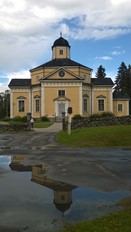
The Toivain family lived in the tiny village of Kajoo, part of Juuka parish in Finnish Karelia. The present-day Juuka church is pictured above.
From the record, I cannot determine whether my ancestors had authority over the entire Juuka parish, or just Kajoo and its environs. My Finnish cousins have no more information to offer.
They did provide statistical information on the the Toivains who served as sexman:
- Petter Toivain, b. 18 Feb 1747 at Kajoo, d. 21 Apr 1809 at Kajoo. Married Anna Frantz 14 May 1765 at Nurmes.
- Petter Pettersson Toivain, b.21 Jun 1771 at Kajoo, d. 26 Jun 1818 at Kajoo. Married Anna Karjalainen, 25 May 1795, at Kajoo.
Clergymen Discovered
 Religious affiliation provides an important genealogical clue to family ties. Parents bring up their children in the faith they practice. Church records for events like baptisms, marriages, and burials provide important dates and places in our ancestors’ lives.
Good records exist for some denominations, notably the Quakers. I have not found any Quakers in my family.
Another denomination with good records is the Lutherans. I was raised Lutheran. Church records for the state-mandated Lutheran church in our family’s old countries, Norway and Finland, can be found online now. Studying these has allowed me to extend my mom’s Nordic family tree back to the mid-1600’s.
My dad’s family has not been so easy. He grew up Presbyterian. His mother attended that church for as long as I knew her. Yet this connection has not been a good clue for genealogical purposes.
After much research, I have learned that she descended from Puritans in Massachusetts. Until they homesteaded in Nebraska, her family was Congregational for many generations.
With a lack of Congregational churches nearby, she and my grandfather took their kids to the Presbyterian Church. Some in his family had been Presbyterian while others were Baptist. I do not know how he was raised.
His father first married a Baptist. This great-grandfather lies buried in a Baptist cemetery alongside his first wife even though he had a Presbyterian funeral service. The second wife, my great-grandmother, attended neither church. She joined a Methodist congregation as a young woman and followed that tradition for the rest of her long life.
With Baptist, Congregational, Methodist, and Presbyterian ancestors, I have no simple denominational path to help me trace my dad’s family. Even if I could identify a denomination to track, it is notoriously difficult to locate their records, if they survive.
In modern times, many of my family members have fallen away from the churches they knew as children. My dad’s family bounced from church to church, if they went at all. My mom and her parents stopped going to the Lutheran churches.
Given this lack of strong affiliation today, I was surprised this week to discover pastors in my roots. All the clergy in my family date back to circa 1700:
- Georgius (d. 1672), Petrus (1630 – c.1691), and Jöran (1665-1722) Wallius/Wallin served as three generations of Lutheran pastors at Kittee in modern-day Finland’s North Karelia region.
- Lars Hallitius Bergman (1640-1688) was Jöran Wallin’s father-in-law. He served the Lutheran Church at Pielisjärvi, also in today’s North Karelia.
- Some sources say it was my ancestor Gershom Hall (d. 1732) who was called as minister in Chatham, Massachusetts in 1717. The name Gershom was a common one in the Hall line during colonial times. Without more research, I cannot say for certain that the Puritan minister Gershom Hall was the same man as my ancestor, but I hope he is.
As a churchgoer myself, I am glad to see that I have these people of faith in my heritage. The calling got lost somewhere along the way. I have found no more pastors in my family lines in the subsequent 200 years.
My family’s long-ago Finnish pastors were notable people in their time. They are named in the history books of Karelia. Someday I will have to relate their stories.