Archive for the ‘Norway’ Category
Some Norwegian Research Helps
 June 13th, 2013 |
  Author:
  A couple of weeks ago I stated my intention to organize my computer bookmarks. Since then, I have worked on doing that. I maintain a “Genealogy Research” folder in my bookmark list, and it contains subfolders for various geographic locations.
This week I cleaned up my “Norway” folder. I find these sites helpful for finding and analyzing Norwegian records:
- The Digital Archives of Norway (http://arkivverket.no/eng/content/view/full/629)
- Norwegian words used in genealogical records (http://homepages.rootsweb.ancestry.com/~norway/na17.html#F)
- Norwegian parish information with links to translations of parish record column headings (http://homepages.rootsweb.ancestry.com/~norway/na20.html
- A database covering volumes 1-17 of Oluf Rygh’s list of Norwegian Farm Names (http://www.dokpro.uio.no/rygh_ng/rygh_form.html)
- Common Norwegian occupations (https://www.familysearch.org/learn/wiki/en/Norway_Occupations)
The ability to analyze records from another time and place does not come easily. Keeping a list of sources and translation information in handy bookmarks can make the process much smoother. It takes time to create and organize your bookmarks, but it really does save time in the long run.
 Posted in
Which is MY Bunad?
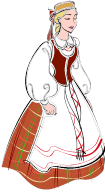 For my birthday recently, my son and daughter-in-law gave me a sølje, a type of jewelry pin worn with a traditional Norwegian costume, the bunad. They thought I should have one of these beautiful pieces of artwork prior to my trip to Norway this summer. This gift prompted me to do a little research on the bunad.
I turned to the Viking magazine, a publication of the Sons of Norway organization. They ran a feature article on the bunad in the May, 2013 issue. According to this article, the bunad is worn on festive occasions and consists of a complete outfit. Each region, valley, or town has its own style, and there are over 450 types of bunads in Norway. Not everyone owns one because they are very expensive and are worn only once or twice a year.
To identify the style of bunad my family should wear, I needed to identify my specific ancestral area. So, what exactly is my ancestral area? I thought it was the Bø municipality of Nordland. Then my husband/tech adviser spent his lunch hours in April and May searching the online Norwegian archives to verify this. He found that my family lived in fishing villages all over Nordland–Vesterålen, Lofoten, and Helgeland. Before that (prior to the Napoleonic Wars) they lived in Bergen.
To represent all these areas, I would need a chest full of pins. I have no idea which bunad I should wear.
I probably should not wear one at all. Besides, when would I wear it? In Colorado we do not celebrate Norwegian holidays. I guess I could wear one to weddings, but that would be rather impractical here. A bunad is quite warm, and most weddings occur during the summer. I think I will stick with the jewelry and wear the gift I received.
I am eager to look for other examples of these pins in Norway. Maybe I can find some in the Ringsaker District of Hedmark where my husband’s family lived for hundreds of years. Pins from that locality would be nice gifts for my granddaughters. And maybe I can get a picture of THEIR bunad.
Busy As Bees on Our Genealogy
 We have had a lot going on in our genealogy world over the past week:
- On Saturday, I attended the spring seminar put on by the Colorado chapter of the Palatines to America http://www.palam.org/colorado-palam-chapter.php. Kory Meyerink of ProGenealogists spoke on various topics. As always, they had a good turnout for this seminar. The gentleman sitting next to me traveled all the way from Tulsa, OK. I feel so privileged to live in a city where seminars of this high quality occur regularly.
- On Tuesday, the Germanic Genealogical Society of Colorado held its monthly meeting at the Denver Public Library. We heard a presentation by our own Joe Beine who runs the Online Searchable Death Indexes & Records website http://www.deathindexes.com/ and the German Roots website http://www.germanroots.com/. These are wonderful genealogical resources.
- All week long, my husband/tech advisor has doggedly used his lunch hours to search for my Norwegian roots. He has now learned that they lived all along the coastline of Nordland and Helgeland. But even more surprising, many of them lived in the Bergen area before that. No way can we visit every site during our trip to Norway next month. The poor man is now busy re-routing our driving trip to enable us to visit as many of these new areas as possible. Meanwhile, I have been entering his data into my software program as fast as I can.
Whew!
A Nordland Hiatus
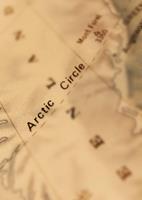 Here it is already May, and I am still not quite finished tagging and scanning all my cemetery photos. Will I ever get these posted to my website and to FindAGrave http://www.findagrave.com/? It seems like I have been working on this project forever, and I feel like I should be further along.
Now, I find myself needing to suspend the project for the next seven weeks while I prepare for my trip to Norway. This probably will be my only chance to travel in the area where my family lived, and I want to see every family-related site that I can. I hope to see the farms where they lived and to find their gravesites, if they still exist. That means I must know where those sites are.
All these people lived in Norway’s coastal Nordland district, north of the Arctic Circle. They were cod fishermen. My husband/tech advisor has valiantly used his lunch hour recently to chase down information on them. He has pursued nearly every line, some back to the 1600’s.
Next I must analyze the records my husband has located. I want to create lists of their farms and churches and plot them onto maps. Armed with these, we will rent a car to drive around Nordland and visit as many spots as we can.
I am beginning by sorting the genealogical documents into generations. My great-grandparents, Ole and Sofie (Siverstdatter) Bentsen, who immigrated to America but were born and married in Norway, are Generation A. Their parents, Karen Marie Johansdatter, Lorents Nicolai Möller Andersen Bentsen, Martha Karoline Dorthea Hansdatter, and Sivert Knudsen, are Generation B. I will work backwards in time through all the generations my husband has identified. I will add every location mentioned on a document to our travel map.
It looks like I have quite a bit of map plotting to do. My husband has noticed that these folks did not stay in the same place. Rather than occupying an ancestral home, they lived all over the islands in western Norway (Vesterålen and Lofoten). My maps will show many anticipated stops. To make the most of my trip to the area, I need to take preparation time away from my photo project.
An Adventure in Norwegian Research
 My husband works with computers all day, so what do you suppose he does during his lunch period? Works on computers!
This quirk of his personality worked to my benefit this week. In anticipation of our trip to Norway, during his lunch hour over the past several weeks he has researched his family using the Norwegian online archives http://arkivverket.no/eng/Digitalarkivet. When he could find no more information on his family, he offered to look for mine!
I had complete information only for my great-grandparents, Ole Bentsen and Sofie Sivertsdatter, who immigrated to the U.S. in 1905. Using the online archives, I had located baptism, confirmation, and marriage records for them and their siblings. I had confirmed the names of their parents (Lorents Nicolai Bentsen, Karen Johansdatter, Sivert Knudsen, Martha Hansdatter) as given to me by their daughter. These records told me that prior to immigration, my family had resided on various farms in the Vesterålen district of Nordland County, Norway. I hoped to visit these farms, the same way we will visit my husband’s farms in the Ringsaker District of Hedmark County.
Before the trip, he wanted to identify my earlier generations and whether they had lived in the same places in Nordland. Soon he found that my family research presented difficulties he had not faced with his. The Hedmark records had been indexed; Nordland had not. Hedmark records went back further in time than the Nordland records. And then there were the farms.
Not really farms at all in Vesterålen, but rather geographic areas of administrative convenience, my family’s residences turned out to be fishing villages on remote islands. My husband came marching into the house after work one evening and announced that we would not be visiting my family “farms” because we have no way to get there. Even the ferries do not stop at many of these places. I will have to be content with visiting the main islands of Vesterålen.
I appreciate all the work my husband did to advance my research. For his sake, I wish it were easier. Now, he should take a break and find something relaxing to do at lunchtime.
Taking Time to Identify Family Farms
 This week I needed something to do when a computer problem prevented me from scanning photos as I had originally planned. I designed a short project related to the trip to Norway that I plan to make this summer.
A couple of years ago I spent a lot of time retrieving and analyzing church records from the National Archives of Norway (http://www.arkivverket.no/eng/Digitalarkivet). These baptism, confirmation, marriage, and death records usually include the name of the farm where the ancestor lived at the time. When I did the original research, I made copies of the records but did not enter the farm names into my database. The unfamiliar farm names were just too hard for me to read, especially when they were abbreviated or the script was faint.
Since then, I have located and saved a list of all the main farms in the district of Vesteraalen where my family lived. I pulled out all my church records and located the farm names. Then I compared the farm names on the records to the farm names on the printed list. Everything matched up! I went back to my database and added the appropriate farm name to each event. I noticed that most of the time during the period I had researched, my Bentsens lived on the Bervik farm in Bø municipality and my Sivertsens lived on the Valfjord farm in the Hadsel municipality. I hope we can visit these places when we take our trip to Norway next summer.
This little project provided a pleasant diversion while I was on my forced hiatus from my scanning project. Now the computer hard drive has been replaced, and I can resume my scanning. I have photos from Nevada, Illinois, and Massachusetts left to do. Next week I will be back to the research plan. But this week I did enjoy revisiting the Norwegian records.
How to Do Genealogy When You Do Not Feel Up To It
 So it has been a crummy winter health-wise. My extended family includes 13 of us in the Denver area, and we have all been sick again and again this winter. After a previous cold and a bout with norovirus, I am now fighting a respiratory infection that just won’t go away.
How do you keep up with genealogy when you do not even feel like getting out of bed? I found some ways.
- Reading back issues of genealogy publications that I normally have no time to read.
- Watching old recorded episodes of Who Do You Think You Are?
- Blogging (between coughing spells).
- Dreaming about my upcoming trip to visit Iceland and our ancestral homes in Norway.
You get the idea. Not much really productive work is going on this week at my genealogy desk. But I am keeping my hand in genealogical pursuits until I feel well enough to do some real work.
On To Norway
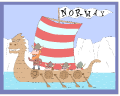 Fjords. Mountains. Land of the midnight sun. We are busy planning a trip. We hope to see all this and more when we travel to Norway next summer. Both my husband and I have Norwegian roots, and we are going to see where our ancestors lived. We will get quite a tour of the country, because our families lived far apart from one another.
Hedmark
My husband’s family emigrated in the early 1880’s from the Ringsaker District of Hedmark, Norway. They lived between Lillehammer and the Swedish border, near Lake Mjøsa. We plan to stay in Hamar, the largest town on the lake.
According to family legend, water from this lake is essential for the proper baptism of infants. We actually have some of this water, collected several years ago by my husband’s mother. Our two grandsons were baptized using this water.
While in Ringsaker, we will visit the family farm and the Ringsaker Church where generations of Hjelmstads have been baptized, confirmed, married, and buried. We will also stop in to see the remains of Hamer’s thousand-year-old cathedral which is now protected by a glass dome. If we get time, we may visit one of the tall runestones in the area.
Nordland
My family lived by the Norwegian Sea, in the Vesterålen and Helgeland Districts of Nordland, Norway. We plan to drive through the various parishes where they resided before immigrating in 1905—Øksnes, Eidsfjord, Bø, Hadsel, and Nesna. To travel between the islands of Vesterålen, we will take speedboats and ferries. Perhaps we will see racks of drying codfish, a sight that would have been familiar to my fisherman ancestors.
Even though we will be traveling in the summertime, we should take cool weather clothing for this leg of our journey. Nordland lies mostly north of the Arctic Circle.
One Final Stop
We plan to fly to and from Norway on Icelandair with a stopover in Reykjavic. We just have to visit Iceland’s Blue Lagoon geothermal spa, the most visited attraction in Iceland. So we will plan to extend our trip by one more day to do just that. Artic weather followed by a dip in geothermal pool sounds great to me.
Advent Calendar and Holiday Foods
 Who can remain uninterested in holiday foods this time of year? This subject lies at the heart of the Christmas season.
In the home where I grew up, Christmas baking began shortly after Thanksgiving. With four children plus grandmothers who always visited for a week or two during the Christmas season, my mom needed to have lots of snacks ready. We baked, and then we baked some more.
Chocolate chip cookies remained everyone’s favorite, and we mixed up quadruple or even quintuple batches. We also baked decorated spritz cookies in several colors. For these we used a hand-powered press containing stiff, refrigerated dough. Each person took a turn manning the press when the previous baker wore out. We displayed the finished product in large clear jars. We also liked to have candy around at Christmas time, too, so we usually made a big pan of fudge and put out colorful ribbon candy.
The biggest baking marathon took place when we prepared the traditional Scandinavian treats. For the fried bread called fattigmand, we prepared the rich dough with a dozen eggs, brandy, cardamom, and 6 cups of flour early in the day. Mom always insisted on fresh cardamom, so we had to shell it all and grind it. After dinner, Mom started rolling and cutting the dough into parallelogram shapes with slits in the middle while we kids folded each piece and shuttled them to Dad. He stood at the stove with the fan running while he deep-fried each piece in hot lard. When the kitchen grew too warm, we opened the front door to let the cold Wyoming wind cool us down. Everyone wanted fattigmand for breakfast or coffee breaks, and they did not last long.
To make our other Scandinavian delicacy, sandbakkelse (sand tarts), we used our thumbs to press sweet dough into tiny fluted tins. Getting the baked tarts out of the tins could be tricky and frustrating. Yet if some tarts broke, we did not mind because we could eat those right away instead of saving them until Christmas.
On Christmas Eve, Mom always made a ham because she found it easy and liked the leftovers. We gobbled it down because we were so eager to get to the gifts under the tree. Before we could begin tearing open the packages, we had to wait until someone made up the Cranberry Twinkle Punch prepared trays of cookies, cheese, salami, and crackers. Sometimes we had kipper snacks, too.
The next day, on Christmas Day, we would enjoy a turkey dinner, very similar to Thanksgiving Dinner of the previous month. We dressed up and dined using our best china and silver at a table decorated with candles and real cloth napkins. As an extra treat, the children were allowed to drink chocolate milk. We were careful to enjoy it all because we knew this meal marked the end of the Christmas cooking and baking season. We would not see food like this again for another year.
A Field Trip
 I am planning a field trip–literally. Our Norwegian forebears raised wheat when they homesteaded on Montana and North Dakota in the early 20th century, and the sites remain as farmed fields. The nearest towns are Plentywood, Redstone, and Homestead, Montana and Palermo, North Dakota. We are heading there soon to visit the homesteads and cemeteries, and to see the land our families knew so well.
Not many people still live in these areas. I found Palermo, with just 74 people, on a list of North Dakota ghost towns. At one time, these places thrived, but the Dust Bowl years began a long period of slow decline. Neither of us has any family left on the MonDak border, although mine still owns farmland near Redstone.
Preparation for this trip began ages ago. First I looked for the homestead files for these ancestors, and they proved difficult to find. Norwegian immigrants came to America with no surnames, and they often tried on several, with various spellings, before settling on one as the new country required. Ultimately, I collected all their land records, and I identified the cemeteries I should visit.
So we will drive and drive through farm country until we come close to the Canadian border. Then we will walk through farmland and fields of eternal rest, remembering the hardy Norwegian homesteaders who lived and died there. If we have extra time, we may drive a little further to visit Mohall, ND, too. An entrepreneur in my husband’s family, M. O. Hall, founded the town and named it after himself. As far as I know, he never farmed anything, and he did not stay in North Dakota. Like so many others, he moved on. Like us, who will leave the fields after a brief visit and return to our busy suburban lives.