Archive for the ‘Genealogy’ Category
Sherman Serendipity
 August 4th, 2016 |
  Author:
  I happened upon a treasure the other day. While contemplating the next step in my Sherman family research, for some reason I looked into a desk drawer that I had not opened in a while. There I found a folder marked “Sherman.” I had forgotten all about it.
It contained several Sherman-related documents I have collected over the years. I had tossed them in the folder awaiting a time when I could focus on the Shermans. Surprisingly, some of the papers were documents I had just been considering seeking as a next step in my research. What a find! (not to mention the opportunity to clean out something from the desk drawer).
First I turned my attention to a Civil War Widow’s pension file. It pertains to my ancestor Thomas Sherman’s brother-in-law, John Alvey. I learned the following from this file:
- Private John Alvey’s widow Evaline (Thomas’ older sister) filed for a pension in 1867, and she began receiving $8 per month. The pension continued until her death in 1922—a period of 55 years.
- The discrepancy on the 1851 Alvey marriage record between her name Evaline Sherman and the recorded name Emeline Shearer was explained as an Estill County, KY scrivener’s error.
- Pvt. John Alvey enlisted as a Union volunteer in August, 1862 at Hendersonville, KY. He served in the 8th Kentucky cavalry.
- Pvt. John Alvey died of diphtheria in January 1863 in a hospital at Hopkinsville, Kentucky.
- When Evaline filed for the pension, both she and two sisters who served as witnesses (Elizabeth Sherman Glover and Gilla Sherman Cobb) had moved from Kentucky to Williamsburgh, Indiana.
- Evaline and John Alvey’s only child, Roena, was born December 25, 1852.
Finding this Sherman folder just when I needed it becomes another example of that genealogy serendipity I experience every so often. Other genealogists talk about it, too. It is almost as if our ancestors want to be found, and they nudge us in the right direction. I cannot wait to see what else I find in this long-forgotten folder.
 Posted in
Six Sherman Sisters
 For more than half the year as I have searched for information on my ancestor Thomas Sherman (1841-1912), I have focused on people with a Sherman surname, namely Thomas and his brothers Anderson, John, and Jasper. I feel that I have about exhausted the research I can do on them from home.
Now I will turn to the Sherman sisters, Polly, Evaline, Emily, Eliza, Gilla, and an unknown sister. As genealogists know, finding information on women presents a more difficult case. So far, I have this evidence for them:
- Polly A. Sherman. She appears as a tick mark in her father’s household on the U.S. census for Morgan County, KY in 1830. She still lived in his household Estill County, KY in 1850, where she is named with an estimated birth year of 1828. She did not live with her father in 1860 or with her mother in 1870.
- Unknown daughter. This girl also appeared as tick mark on the 1830 census. The 1840 census for the Daniel Sherman household has not been found, and by 1850 this daughter was not in the household.
- Evaline Sherman. She was born 5 Aug 1834 in Kentucky, and she married John Alvey in Estill County, KY in 1851. They had a daughter Roena before John was killed in the Civil War. Evaline migrated to Illinois where she worked as a dressmaker in Coles and Edgar Counties. She died in Paris, Illinois on 9 September 1922 and is buried in the Mound Cemetery in Charleston, Illinois.
- Emily E. Sherman. Her first appearance in the record was the 1850 U.S. census listed above with an estimated birth year of 1836. She did not live in her father’s household in 1860.
- Eliza A. Sherman. Like Emily, her name first appears on the 1850 U.S. census. She was born approximately 1838.
- Gilla Ann. Her name appears variously in the records as Gilla Ann, Gilly Ann, and Gillian. This sister was born 26 March 1843 and married John Cobb in Johnson County, Indiana on 4 August 1864. They had five children (Albert, William, Amanda, John, and Walter). They ultimately settled in Barton County, MO. Gilla died 16 March 1923 and is buried in the Lake Cemetery in Barton County.
The Kentucky records present a couple of interesting questions for these girls:
- Who was the Elizabeth Sherman who married John H. Glover in Madison County, KY in 1853? Was she Emily E. or Eliza (who would have turned 15 that year) or the unknown sister? The marriage bond was signed by the father Daniel Sherman and witnessed by the brother Anderson and the sister Pollyann. The 1880 census record for the John H. Glover household in East Nelson, Moultrie County, IL gives Elizabeth’s birth year as approximately 1836, the same as for Emily E. Sherman.
- Who was the Louisa Jane/ Luezah Jane Sherman who married Stephen Dyke in Madison County, KY in 1856? Again, the marriage bond was signed by Daniel Sherman. Was this the same couple that appears in 1870 in Johnson County, Indiana (near the Anderson Sherman household) with a wife named Eliza Jane born about 1839?
I have more documentation for Evaline and Gilla Sherman than I have for the other sisters. This is because they are named as survivors of Thomas Sherman in his 1912 obituary. Given their places of residence that year, it was not too difficult to find additional records on them.
After the nineteenth century, I have no information on the other sisters. I plan to begin hunting for the remaining Sherman sisters by following the paths of the Glovers and the Dykes to see where this leads me.
A Different Sort of Summer Research Trip
 Have you ever visited the Pawnee National Grassland in Colorado? The web link to their page on the National Forest Service site is too long to display here, but you can find information easily by doing a web search.
We visited the Grassland with some of our young grandchildren for a camping trip over the weekend. There we found a nice, shady campsite along Crow Creek, short hiking trails suitable for kids, and even a display of old farm implements used by homesteaders.
The grassland lies in northeastern Colorado, near the Nebraska and Wyoming borders. Thus, my Riddle and Reed ancestors had homesteads just across the state lines of those two states. Visiting the Pawnee National Grassland gave me an idea of what those homesteading experiences might have been like. The Forest Service has put up several interpretive signs that helped me understand the history and geography of the area:
- We learned that fur trappers worked along Crow Creek, cowboys drove cattle along a trail running between Montana and Texas, and settlers followed the Overland Trail along the South Platte River. My own later-arriving ancestors homesteaded in Nebraska in the 1880’s and Wyoming during World War I, so I assume they came west by train.
- The prairie sees extreme temperatures. We endured a hot summer weekend with the thermometer reaching into the upper 90’s, just as my ancestors did.
- We saw birds. Boy, did we see birds. The Pawnee National Grassland is a well-known bird-watching area, and we saw our first lark bunting—the Colorado state bird. Okay, perhaps we have seen them before but did not know what they were.
The grandchildren particularly liked the short prairie grass. They loved tramping about in the knee-high greenery. I tried to view it more as my homesteading ancestors must have, seeing what would have been quite a challenge to replace using the primitive farming equipment we saw at the campground.
The Grassland provided a spot for a great camping trip. We loved the opportunity to spend some time with the next generation. I got a renewed appreciation for the hardships my ancestors (both single women!) faced in coming to this part of the country. Although this was not the research trip to a repository or cemetery that I usually take, it had value of its own. It gave me a much better sense of my family’s journey.
Reading, Genealogically Speaking
 Often when I hear a program by a professional genealogist, I learn that I should try to familiarize myself with the history of a place before I begin doing research for that locality. This is good advice.
The study of what we consider history was current events for our ancestors. They lived in a time and place affected by the politics and economics going on around them. Events such as wars, natural disasters, and financial panics can explain their actions.
Nearly every day I make time to do some genealogy reading. This summer I am enjoying a well-told tale about the peopling of British North America by Edward Bailyn, The Barbarous Years: the Conflict of Civilizations 1600-1675,. I have numerous Colonial lines, so I need to know about the relationships between colonists and Native Americans and about the relationship of the colonies with England. I need to know about the laws of the time for things like licensing and indentures. I need to know about the importance and activities of religious groups. Bailyn describes it all.
I often take notes as I read. Anecdotes from specific times or places can add interest to my family stories.
I also update a handy timeline of American economic crises. From this I can tell at a glance whether a sudden move could be explained by widespread financial trouble. The list includes:
- 1764, England prevented the colonies from making paper money,
- 1819, a recession after the War of 1812,
- 1837-43, a prolonged recession,
- 1873, a banking collapse,
- 1893, a railroad collapse,
- 1907, the panic of 1907,
- 1929, stock market crash and beginning of the Great Depression.
Reading enhances my understanding of the time periods when my ancestors lived. Good background knowledge makes me a better researcher. Those genealogists who advise us to do this have the right idea.
The Sherman Family on FindAGrave
 Over the past couple of weeks, I have spent time on the Find A Grave site (http://www.findagrave.com/cgi-bin/fg.cgi?page=gs&) to document burials and family links for my Sherman family. I looked for my ancestor Daniel Sherman, his wife Rebecca Howe Day, and their children, including my great-great grandfather, Thomas Sherman. Things did not go smoothly. So far, my results look like this:
- Daniel Sherman, about 1800- ? I do not know when or where he died, and no likely candidate comes up in a Find A Grave search.
- Rebecca Howe Day, 1808-1876. She was buried in the Swango Cemetery, Symmes Township, Edgar County, Illinois. I have requested a photo of her cemetery marker.
- Polly Sherman, about 1828 – ? I know only that she was born in Kentucky, not enough information to do a Find A Grave search.
- Anderson Sherman, 1852-1910. Oddly, he has two burial monuments on Find A Grave. I believe he was buried in the Antioch Baptist Cemetery in Saline County, MO in 1910. I contributed a photo of that cemetery marker to Find A Grave. Someone, however, created a monument for him in the Nineveh Cemetery in Johnson County, Indiana alleging a burial thirty years earlier in 1880. This week a Find A Grave volunteer could not find a record or marker for Anderson at that place. The person who created the Indiana monument has been asked to either provide some evidence for his burial there or take down the Find A Grave memorial.
- Evaline Sherman Alvey, 1834-1922. Her obituary states she was buried in the Mound Cemetery, Coles County, Illinois. The cemetery has a record of her burial but there is no marker on the plot.
- Emily Sherman, about 1836 – ? and Eliza Sherman, about 1838 – ? I do not have enough information about these girls to do a Find A Grave search.
- Thomas Sherman, 1841-1912. His obituary states he was buried in the Mound Cemetery in Coles County, Illinois. The cemetery has no record of his burial, and no marker has been found.
- Gilla Sherman Cobb, 1843-1923. She was buried in the Lake Cemetery, Barton County, Missouri. I have requested a photo of her cemetery marker.
- John Sherman, 1845- after 1930. I do not when or where he died. In 1930, he was living with his son Frank in Madison County, Illinois.
- Jasper Sherman, 1849-1878. He was buried in the same cemetery as his mother in Edgar County, IL. I have requested a photo of his cemetery marker.
In summary, I have three outstanding requests for cemetery marker photos (Rebecca, Gilla, and Jasper), two that were not found (Evaline and Thomas), and one person who purportedly died and was buried twice (Anderson). I need to do more research on five others for whom I have not located any death information (Daniel, Polly, Emily, Eliza, and John). No one has a complete record.
Find A Grave is a wonderful tool, and I contribute to it whenever I can. So many volunteers have answered my call for photos of cemetery markers. The site provides a great way for us to lend a genealogical helping hand.
A DNA Test Pays Off
 Some time ago I asked my dad to take a DNA test. All my brick wall ancestors lurk in his side of the family, so I keep hoping a DNA match will turn up to help resolve questions on these family lines. Dad does not use a computer, so I manage his DNA accounts for him.
Over time, we have worked with a few of our identified matches trying to figure out how we are related. Generally we have identified a common ancestor and then gone our separate ways. Most of these people seem to have done DNA testing mostly to learn about their ethnic heritage, not because they have a deep interest in genealogy.
That changed a few weeks ago. A third cousin contacted us because her DNA test identified a match to us. We exchanged some information via e-mail. Then we agreed to a phone call to talk over our mutual family history. We learned that we live within driving distance of each other, and we both know a local professional genealogist. We decided to meet for lunch.
Yesterday we shared a meal and spent two hours exchanging more family information. We agreed to work together in our research on our Reed and Carter family lines.
I am thrilled to have a new research partner for this branch. For years I had worked with a couple of my dad’s cousins on these same lines, but both of them have passed away now.
Advice I received years ago has paid off again. Vern Tomkins, a former President of the Colorado Genealogical Society always said, “Keep contacting your cousins. You never know what they may have.” And then there is the corollary stated by Terry Quirk, a former Vice President of the Society, “Contact the oldest and sickest ones first.”
My newly-identified cousin and I are not particularly old or sick, but I am sure glad she contacted me.
Where Are the Records?
 My research into my Sherman ancestors remains pretty much stuck in the mid-19th century. I need to find some additional records to learn more about them.
Current information on their movements boils down to this:
- The Daniel Sherman family lived in various central Kentucky counties from the late 1820’s on. Daniel and his wife Rebecca sold their place in Madison County in 1863, and he disappears from the record after that.
- The oldest son, Anderson Sherman, relocated to Brown County, Indiana sometime before 1860. He and his family eventually moved on to nearby Johnson County.
- Daniel’s sons Anderson and Thomas registered for the Civil War draft in 1863 in Johnson County, Indiana.
- Daniel’s daughter Gilla Ann married John Cobb in Johnson County in 1864.
- By 1870, numerous members of the family including the wife (widow?) Rebecca; sons Thomas, John, and Jasper; daughter Evaline Sherman Alvey; and 4-year-old granddaughter Anna Petronellia Sherman all lived in Edgar County, Illinois.
Now I have these questions:
- When and where did Daniel Sherman die?
- When and where did Thomas Sherman marry Anna Petronellia’s mother? Who was she? Her granddaughter’s report that she was Katherine Stillenbaugh from Germany has not been verified.
- Did Thomas serve in the Civil War? His family claimed he enlisted at Louisville, KY, but so far I have found no service record or pension application. His brother Anderson filed for a Civil War pension, but it was denied due to lack of evidence of his service.
I intend to develop a research plan for each of these questions. They have plagued me for years, and I would love to answer any or all of them.
Katherine, the Brick Wall
 As I work on learning the details of the life of my great-great grandfather Thomas Sherman, I continue to puzzle over his activities during the 1860’s. The biggest riddle remains the identity of his first wife, and my great-great grandmother. According to family lore, she was German, and her name was Katherine Stillenbaugh or Stanabaugh. Thomas and Katherine were said to have resided in or near Indianapolis where their daughter, Anna Petronellia, was born in 1865. Katherine reportedly died shortly afterwards. No record of her has been found to verify any of the family story.
I know these facts about Thomas and his family during that decade:
- In 1860, Thomas’ name appears on the U.S. census for Madison County, Kentucky in the household of his father, Daniel “Shearman”. Thomas was a 19-year-old blacksmith.
- In 1862, a man named Thomas Sherman, presumably my ancestor, filed suit in Madison County over the taking of a horse by Confederate soldiers.
- In June 1863, Thomas and his brother Anderson registered for the Civil War Draft at Ninevah, Johnson County, Indiana.
- Thomas and Anderson’s younger sister Gilla married John Cobb in Johnson County in 1864.
- By 1870, Thomas worked as a blacksmith in another man’s household in Edgar County, Illinois. His four-year-old daughter lived with his mother, Rebecca, in the same county.
It seems that Thomas relocated from Kentucky to Indiana sometime during the Civil War. He joined his older brother Anderson and lived in the county just south of Indianapolis. This much fits the family story. But what about the rest of it?
Anderson had lived first in Brown County and then moved a few miles northeast to Johnson County. Among his neighbors was a German family named Stilgenbauer, a name several of them Anglicized to Stillabower or Stilabower. These names are tantalizingly close to the Stillenbaugh name reported by the grandchildren of my German ancestor. Did she belong to the Stilgenbauer family? If so, I cannot find a likely candidate named Katherine on the 1860 Indiana census. I have been unable to locate a marriage record for Thomas in Indiana, nor have I found burial information for Katherine Sherman. Nothing I have found so far verifies her identity.
I need to locate some more Indiana records! I need to do more research on the Stilgenbauer family. We have had this brick wall ancestor for far too long.
52 Ancestors in 52 Weeks nos. 13 and 14—Alex and Ada Mattila
Suomi, or “Finland” as most people know it, is a Nordic country east of the Bothnian Sea. Three ancient tribes settled there, the Finns, the Tavastians, and the Karelians. Even after Finnish unification under the Swedes, the eastern area known as Karelia retained an identity of its own. The people had long traditions of folk music and mysticism, and today the Karelian culture is perceived as the purist expression of true Finnic ways and beliefs. The Finnish epic poem, The
Kalevala, draws mostly from Karelian folklore and mythology. Many of the works of the Finnish composer Jean Sibelius took influence from The Kalevala.
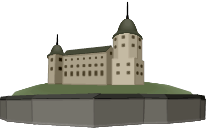
Ada and Alex Mattila came from Viipuri, Finland, at the southern end of Karelian lands. This historically Lutheran province of Finland, known for its iconic Vyborg Castle, now lies divided between Finland and Russia in the area between the Baltic Sea and the White Sea. Over the centuries, the Swedes and the Russians have exerted a heavy influence over Karelia.
Beginning in the 13th century, these two fought bitterly over it, and a treaty in 1323 divided Karelia between them. The city of Viipuri (“Viborg” to the Swedes and “Vyborg” to the Russians) became the capital of the new Swedish province and ultimately the second-largest city in Finland. The surrounding area became part of Viipuri parish.
The Swedes retained control of Finland, including their part of Karelia, for the next 500 years until the Napoleonic Wars. In the meantime, the Russians maintained the remainder of the ethnic Karelian lands. After Napoleon, the Russians received Finland from the Swedes as part of the war settlement, and a unified Finland became a Duchy of the Russian empire. Thus the Karelians were reunited for the next hundred years under one ruler, the Czar.
Early Life
Into this troubled land and time, Alexander Mattila was born. His parents were Elisabeth (“Liisa”) Myllynen and Antti Abelsson Mattila. The father was listed as “Anders” in the official Swedish-language records of the time. “Antti” and “Anders” are the Finnish and Swedish renderings of the English name, Andrew.
The Mattilas lived in the rural village of Alasommes/Alasommee, Viipuri province, Duchy of Finland, and Alex was probably born at home. The actual date remains in question with various records reporting April or May, on the 8th or ninth of the month as his birth date. Some documents give the year as 1878, others say 1879. The Viipuri rural parish record lists his birth date as May 9, 1878 with his baptism following three days later on the twelfth of May.
Alex was the youngest of at least nine children, and he was the only boy. The father died when Alex was quite small, and his mother made her living by laying out the dead. The boy Alex often accompanied her.
As a young man in 1904, Alex worked and resided at Kolikkoinmaki, Finland. He planned to marry Ada Alina Lampinen, and marriage banns were published in January 1904 at the Lutheran church in Viipuri.
Fair-haired Ada was the daughter of Matti Lampinen, a lodger, and Anna Miettinen. Ada was born on September 25, 1879 in the village of Nunnanlahdentie, Kuopio Province, Finland, north of Viipuri. The area now lies in the province of Eastern Finland, created in 1997. On November 16, 1879, Ada was baptized in the Juuka parish. Ada’s children later said they knew nothing of her family.
Ada and Alex were married in Viipuri on May 14, 1904, and Ada transferred her church membership to the Viipuri rural parish in July. By 1905 Alex was working as a laborer in Viipuri. Conditions in Finland were hard at that time. Harsh Czarist rule left the Finns with little power over their own affairs. There were periodic famines, and tuberculosis afflicted many people.
Perhaps some of these problems led Alex and Ada to devise a plan to immigrate to America. Alex applied for and received a Finnish passport in February 1905. Leaving Ada behind temporarily, he traveled to the port town of Hanko on the south coast of Finland to catch a boat to Liverpool, England.
There he boarded the Cunard steamship Ivernia on March 25, 1905 bound for the United States. He arrived in Boston, Massachusetts on April 9, 1905. He reported to the authorities that he planned to join his “uncle” (actually his brother-in-law) Oskar Silberg in Superior, Wisconsin. Many Finns settled in the Great Lakes area where the climate resembled that of Finland, and industries needed workers.
Ada followed later, probably after Alex had set up a home for them. She applied for a Finnish passport in June 1905 but no passenger record for her has been found. She had certainly arrived in the U.S. by November 27, 1906 when their first child, Martha Louise, was born in Hibbing, Minnesota.

Building a Family in Minnesota
For the next several years, Alex worked to establish himself in the multi-ethnic Hibbing area. At least until 1915, he labored among other Finns and other men from all over Eastern Europe in one of the numerous iron mines of northern Minnesota. Meanwhile, he and Ada struggled to learn English. The U.S. census reports that Alex could speak English by 1910 but Ada and little Martha could not. A new language was easier for men to learn because they went out to work every day and heard it spoken there. When reading the 1920 census, one can almost hear their heavy Finnish accents. Their household is listed under the name Alex Sandermattila.
On March 6, 1915 Alex filed a Declaration of Intent to become a citizen of the United States. He was described as five feet, five-and-a-half inches tall, weighing 160 pounds, with a light complexion, medium brown hair, and brown eyes. The same description appears on his World War I draft registration card dated September 10, 1918. He became a citizen of the United States in 1922.

During the World War I years, Alex and Ada added more children to their family. These came as a surprise to their daughter Martha, ending her 10 years as an only child. Her sister, Aida Sylvia, arrived on October 2, 1916.
Aida lived the longest of the Mattila children, passing away at age 83 on June 18, 2000 after suffering a broken hip. She married twice, first to Walter Jametsky. They held their wedding reception at the Mattila house, and Alex Mattila’s older sister Anna Mattila Anderson attended. She was a staunch member of the Finnish Temperance Society, and when she found out that Alex was serving liquor to the guests upstairs, she got mad and went home.
Aida and Walter had one daughter, Judith Ann, and soon divorced. After the divorce, Aida and Judy lived with the Mattilas while Aida worked as a hotel elevator operator. Aida later married John Kerzie on May 23, 1953. They lived in Chisholm, Minnesota in the house where John was born. John worked in the mines and was active in labor union affairs. Aida kept house, putting her college training in home economics to good use.
A brother for Martha and Aida entered the household on June 5, 1918 with the birth of Hugo Alexander Mattila. Hugo had a wild streak and got into a bit of trouble as he grew. Once he went on a “bum” to California, hitching a ride on a train with a pal. The friend fell off and was killed. Another time, Hugo joined the cavalry, did not like it, and needed his mother to pay for his release. Along the way, he also worked as a ski jump instructor and boxed in Golden Gloves. Contrary to the advice of his temperance-minded aunt Anna, he enjoyed visiting local taverns. When he had too much to drink there, his policeman brother-in-law Bjarne Bentsen would take him home in the police paddy wagon.
Hugo eventually joined the Army Air Corps. During World War II, he served as a bombardier in Europe and achieved the rank of Lieutenant. While in the service, he married Ann Dorchock. During their marriage, Hugo went to college on the GI Bill and earned a degree in Civil Engineering. Meanwhile, he and Ann had three children: Robert Ray, Beverly, and Karen Marie. Sadly, little Karen passed away at the age of 6 in 1952 due to spinal meningitis.
Sometime after that, Hugo and Ann divorced, and Hugo remarried right away. He and Donna lived in Gainsville, Florida and had 6 children together: Kathleen, Virgina, James, Karen, Kelly, and Brian.
Hugo suffered a stroke later in life and was confined to a wheelchair. He died from the effects of a fire in his home on December 5, 1987 at the age of 69.
The last child and second son of Ada and Alex Mattila, Peter Bernhard, was born on November 19, 1919. Pete was not yet a teenager when Martha’s children Joyce and Ron were born, and he played with them as he grew up. He took them skiing (on barrel staves) and golfing (with homemade clubs while he worked at the local golf course).
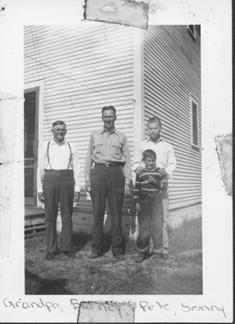
Pete and Hugo would get wind-up toys for Ron for Christmas and then invite him over to play with them before Christmas. Later, both of the Mattila sons joined the Civilian Conservation Corps (CCC) and lived in the camps.
Eventually, like his brother, Pete joined the Army Air Corps. He made it his career. His nephew Ron joined the Air Force, too, and during the Korean War they served near each other in Japan. According to Ron, Pete liked to get in bar fights when he was off duty. A few years later, on June 1, 1959, Pete died unexpectedly from a heart attack at age 39 while serving at Eglin Air Force base in Florida. The family later speculated that because Pete had never shown any signs of heart trouble, the Air Force was concealing his true cause of death.
 A Carpenter’s Life
By 1920, with his family of two daughters and two sons complete after 15 years in America, Alex Mattila had found some financial success. He owned a home without a mortgage on 2nd Avenue in Hibbing. He and his family lived on the ground floor, and they rented upstairs rooms out to two other families.
Finland is known for its carpentry industry, and somewhere along the way Alex learned this craft. By 1920 he had left the mines and was working as a carpenter. He continued in this occupation for the rest of his life, working at various times for the Messba Construction Company and the Ryan and Stavn Lumber Company where he worked at the time of his death. Years after he died, people in Hibbing would remember him walking down the street, carrying his carpenter’s toolbox. He built houses, but in his spare time, he enjoyed fashioning little hand-carved toys for his children and grandchildren. He also built a lovely dollhouse for his granddaughter, Sharon Bentsen.
As their finances improved, the Mattilas moved to a home Alex built on Thirteenth Avenue in Hibbing. They also purchased some farmland near the Hibbing airport. They hoped it would be valuable someday. Until they felt ready to sell it, they used the land to grow vegetables and other food. Ada often took the children and grandchildren out there to pick berries and mushrooms.
Alex sent his daughters to college in the 1920’s and 1930’s although only Martha actually graduated. She earned a 2-year degree allowing her to teach elementary school, and she promptly left Minnesota for adventure in Montana.
There she taught at the Two Tree country school near Redstone and lived with the Ole Bentsens, a nearby farm family. Their younger children, Jennie and Otto, attended the school. Martha married their older son, Bjarne, at the end of the school year on June 2, 1928.
Martha and Bjarne stayed in Montana long enough for their eldest child, Joyce Beverly, to be born on April 8, 1929 in Plentywood. After that, they relocated to Minnesota where they lived next door to the Mattilas, in another house that Alex had built. Not long after the move, Martha and Bjarne had a son, Ronald Duane, on January 14, 1931. Bjarne worked as an electrician in the mines for a while and then joined the Hibbing police force.
The Mattila’s seemed to enjoy having grandchildren next door. Ada always had a cake ready for snacking while they relaxed in the covered porch. She regularly offered them her homemade bread, which she would let rise on the stovetop before baking it in the coal stove. Alex liked to tease her that the big stove served double duty as her dressmaker’s model.
Alex and Ada also spent time teaching the ways of the old country to the children. Joyce used to accompany her grandmother to the local Finnish sauna and her grandfather on trips downtown. Ron helped his grandfather make dandelion wine. Both kids were amazed that neither grandparent celebrated birthdays, nor did their grandfather attend church. They did their own doctoring, including lancing boils and pulling bad teeth with the pliers.
They continued to speak Finnish at home, and Martha spoke with Ada in that language when she did not want the children to eavesdrop. Later, when Aida and Judy lived in the Mattila house during the 1940’s, Judy learned very little English before she started school. The teacher had to contact Aida to request that she work on English skills with the little girl.
Ada and Martha did not get along particularly well, and others sometimes had to settle their differences. Since they lived next door to one another, they shared a clothesline in the back yard. Ada valued tidiness, and she always collected her clothespins from the line when she took in her laundry. Martha preferred convenience and left her clothespins on the line until next time. Unfortunately, by then Ada had usually collected all of Martha’s clothespins and taken them inside. The battle of the clothespins escalated until Bjarne finally stepped in. He painted all of Martha’s clothespins red so there would be no confusion as to their ownership.
Aside from these typical family squabbles, life went along more or less as usual through the World War II years. The family avidly read letters from Hugo and Pete in the war zone, and the parents must have worried about them. We can wonder how they felt when their Viipuri homeland was ceded to the Soviet Union in 1944. Most of the Finns living anywhere near Viipuri walked out of the area and resettled in other parts of Finland. Russians moved in to fill the void, and very few Finns live in Vyborg and its environs today.
A Sorrowful Ending
In early April, 1945, Alex returned home from a trip downtown and reported in his accented English, “Roosevelt, he die.” No one believed him. Yet, it was true. Four-term President Franklin Roosevelt had passed away just as Alex had heard in town.
A day or two later, on a Saturday evening, Ada handed Alex his usual silver quarter to spend during an evening out. He always walked into town to gather with friends at a local tavern on Saturday nights. Several hours later, the police came to the Mattila door.
The family learned that while Alex walked home along the railroad tracks that night, he had been struck and killed by a train. Someone needed to go down to identify the body. The task fell to his son-in-law, Martha’s husband Bjarne.
No one was more stunned than Ada. She said, “I no live long now.” Yet she did live another three years. After her husband’s death, she finally joined the local Lutheran church, something Alex had never wanted to do. She also remained active in the Finnish Temperance Society and the Order of Runeberg, a Finnish cultural group.
One spring day three years later, on May 12, 1948 she went down the street to fetch her young granddaughter, Judy, who was out playing. While they walked back home together, Ada collapsed and died of a cerebral hemorrhage at the age of 68. She was buried next to Alex in the Maple Hill Cemetery in Hibbing. Later, their son Peter was buried near them.
When she died, her estate was distributed according to a plan Alex had devised during the 1930’s. Aida received the house and its contents, Hugo received the money, and Peter received the farm. Martha, deemed “sufficiently provided for” by having already received an education and other forms of Alex’s goods , was disinherited.
That Alex and Ada had so much material wealth to leave behind is a tribute to their spirit. They had the courage and initiative to leave a bad situation to make a better life for themselves in a new land. They found a happy community of like-minded immigrants and thrived despite a language barrier, social stigma against immigrants, economic hardship during the Great Depression, and anxiety from two world wars. They gave their American-born children the tools they needed to succeed in life. They could be proud of what they had achieved.
The Shermans and the Census
 My Sherman family lived in southeastern Illinois from about 1870 on. I have spent several hours with the United States census records for Coles and Edgar counties trying to learn more about this family. I had hoped to learn the following:
- How this extended family moved through the area,
- Where the Sherman family originated,
- Whether other Shermans who lived in these counties are related to me.
The earliest Sherman ancestor I have identified is Daniel Sherman (about 1800-aft. 1862). Not all of Daniel’s children settled in Illinois, but I know that Anderson, Evaline, Thomas, John, and Jasper passed through there. Daniel himself does not appear on the Illinois census, and I believe he died before 1870.
In that year, Anderson Sherman lived in Indiana, but the others had moved on to Illinois by then. According to the census, most of them lived in Paris Township, Edgar County. Daniel’s widow Rebecca lived in a household with her son John and her 4-year-old granddaughter Annie, who was Thomas’ daughter. Jasper Sherman and his wife Armecia, and Evaline Sherman Alvey also lived in Paris Township. Thomas was also widowed, and he worked in nearby Hunter Township at the time. Other Sherman families lived in Embarrass and Grandview townships, but I do not know whether any of them are related to my family. My Shermans had lived in Kentucky before the Civil War, while these other Shermans seem to have come from Germany, Pennsylvania, and Ohio.
By 1880, I can find no family members still living in Paris Township. Thomas now lived with his daughter and new wife in Edgar Township. Rebecca and Jasper had died and are buried in Symmes Township. John had married and gone back to Kentucky. Anderson had joined Thomas in Illinois, but he lived in Elbridge Township, as did a Sherman couple from Pennsylvania. I have not located Evaline Sherman Alvey on the 1880 census. The unidentified Shermans who had lived in Embarrass Township in 1870 remained there in 1880, but the other Sherman family no longer lived in Grandview Township.
These migrations through Edgar County do not provide much insight into my Sherman family. I have learned only that while their mother was alive, they all lived fairly close together, but they split up and began to go their own ways after she died in 1876.
So what, if anything, can I learn about Daniel Sherman from these census records? Of course, they indicated he probably died before 1870, but they do not tell me when or where. Furthermore, the records conflict on where he was born. Each child reports different information for his/her father’s birthplace:
- Anderson (the oldest son) identifies his father’s birthplace as Kentucky or Pennsylvania,
- Evaline said her father was born in Kentucky or New York,
- Thomas listed his father’s birthplace as unknown or New York,
- John always said his father was born in Kentucky,
- Jasper died before the birthplace of parents was recorded.
Daniel himself always reported his birthplace as New York, a state sometimes echoed by Evaline and Thomas, so that is probably correct. Unfortunately for me, New York is a big place, and I know only that Daniel lived in Kentucky by the late 1820’s. None of the other Sherman families in Coles and Edgar Counties came from New York. No help there.
I have learned all I can from these census records. Now I have four other daughters (Polly, Emily, Eliza, and Gilla) to locate on census records for the late 1800’s and early 1900’s. As far as I know, they did not move to Illinois, so I will need to look for them in other states. First, I need to verify married names for Polly, Emily, and Eliza. Then I will search for their census records, too, in hopes of learning more about this family.