Archive for the ‘Genealogy’ Category
The Glover Boys: Bad Men
 October 13th, 2016 |
  Author:
  Genealogist like to talk about their Black Sheep ancestors. This week I found a few as I read some historic newspapers.
Members of my family became original pioneers of Coles County, Illinois around 1830. The locals kept good records, and I have quite a bit of success learning about the lives of those who lived in that area during the nineteenth century. The newspapers from Mattoon, Illinois provide an especially rich source. There I found many mentions of “Bad Man” Frank Glover and his siblings.
My second great-grandfather Thomas Sherman’s sister had married a Glover, and this is my connection to the Glover family. Frank was one of her sons. He and some of his brothers often ran afoul of the law. The Mattoon newspapers documented it all. They labeled Frank with the epithet, “Bad Man”.
What did he and his brothers do?
According to the papers, Frank had no occupation. Over a fifteen-year period, he robbed a man at gunpoint, shot a Sheriff’s deputy who attempted to repossess some property, and stabbed the village Marshal during a fight. He served time for these crimes.
Frank’s brother Henry Glover was a counterfeiter. The paper described Henry as a Republican who favored the unlimited coinage of silver and home-made dollars. Henry liked physical fights and even faced charges once for beating up Frank’s wife. Henry died a violent death when he mysteriously was shot in his home one Saturday night. He made a dying declaration naming his assailant, but no one believed him.
Another brother, Edward, ran a grocery story. He was indicted on occasion for selling tobacco to minors. His store seemed to suffer no end of criminal activity including burglary, robbery, and mysterious fires.
These guys definitely qualify as the Black Sheep of my family. Their cousin, my great-grandmother Anna Petronellia Sherman, was said to dislike her family. Perhaps these fellow’s activities contributed to her opinion. A staunch Methodist, Petronellia most certainly would have considered her Glover relatives to be bad men.
 Posted in
Narrowing Down a Birthplace
 Nearly fifteen years ago I began searching for information on my great-great grandfather, Thomas Sherman (1841-1912). I began with only the family story. He served in the Civil War, and then he married a German girl who died at Indianapolis shortly after their daughter Anna Petronellia was born in 1865. Later in life he worked as a blacksmith in Coles County, Illinois. During the 1880’s he married Alice Farris, a woman the same age as his daughter, and had several more children.
I began my research into his life by reviewing his obituary. It identified some of his siblings but did not provided a birthplace. I then turned to the U. S. census records. I found that most of the Sherman siblings had been born in Kentucky. But Thomas himself and one sister, both middle children, consistently had Ohio listed as their birthplace.
Where in Ohio? I could find no record that even listed a county, much less an actual town or post office. Ohio has 88 counties, and that proved to be too many to search without some additional information.
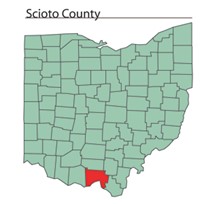
This week a new clue turned up. I came across the Kentucky marriage record for Thomas’ sister, E. E., to John Glover. I had located their Madison County marriage bond and consent many years ago, but I could not find a marriage record. This week on Family Search, I looked at a Kentucky-wide database and at long last found their marriage record in nearby Estill County, not Madison. And there was the clue I needed. This sister, also born in Ohio, provided her birthplace county, Scioto, for the record.
Scioto county lies on Ohio’s southern border just across the Ohio River from Kentucky. Perhaps Thomas was born there, too. The Sherman-Glover marriage information may really narrow down my search for Thomas’ birthplace.
Of course I immediately looked for the father’s name, Daniel Sherman, on the 1840 U.S. census for Scioto County. There he was on the index! But when I looked at the image of the actual record, the name does not look like Sherman to me. Still, the indexer thinks otherwise. To settle this in my mind, I need some corroborating evidence.
If the name truly is Sherman, the larger question of whether the Daniel Sherman in Scioto County in 1840 is the same man as my Daniel, father of Thomas, also remains. I intend to create a research plan for this question. At least now I have an idea of a location where I can begin to find an answer.
Genealogy Eyewear
 Do you have trouble seeing a computer screen? I do.
I spend many hours a week in front of the computer in my genealogy pursuit. My eyesight is not great. For several years I have worn either bifocal contact lenses or progressive lens glasses. The sweet spot in the lenses for the middle distance needed for computer viewing is quite small. Increasingly, I have found myself with my head tilted up and back as I worked. Only from there could I focus on the screen. At the end of a session, my neck and back hurt.
It finally dawned on me this summer that optometrists have devised a solution for this problem. Computer glasses! My husband/tech adviser has had them for years, but I never before realized that I needed them, too. He urged me to get some.
When I went in for my annual vision checkup this month, I asked about getting a pair. Not only did my doctor think it a good idea, he also told me that I had a choice of two different types.
He asked whether I worked in a business office where I would sometimes need to walk around to meetings, etc. Or did I work in a Just-Me-And-The-Computer setting? The answer to this question would influence how much of the lens on the glasses could be devoted to the computer-viewing distance.
Of course I work in my home office, so I do not need glasses suitable for a large work setting. Based on that information my optometrist wrote up a prescription. Soon I was off to the frame showroom to select the style for my new eyewear.
I picked them up yesterday. What an improvement! I am hoping neck strain will be a thing of the past for me. I just need to remember the technician’s parting instructions, “Do not use these for driving!” I got it—computer only.
Differentiating Emily and Eliza
 My ancestor Daniel Sherman (abt. 1800-bef. 1870), a blacksmith who lived in central Kentucky, had several children. Among his daughters enumerated on the 1850 census we find two girls named Emily E. and Eliza J.
Later that decade, we find Daniel giving consent for his daughters to marry. This time, their names appear as Elizabeth (E. E.) and Louisa Jane. Same girls? If so, how do we reconcile these differences in their names?
I do not feel I have yet sorted this out, but so far I have assembled this evidence for the daughters:
Emily E. Elizabeth (E. E.) Eliza J. Louisa Jane
b. abt. 1836 (1850 census) b. abt. 1836 (marriage) b. abt. 1838 (1850 census)
b. Kentucky (1850 census) b. Scioto Co., OH (marriage) b. Ohio (1850 census)
b. 1836 KY (1880 census)
m. John H. Glover (marriage) b. KY (1860-70 census) m. Stephen Dykes (marriage)
John H. Glover has not been found on the 1860 or 1870 census records. His wife Elizabeth, born in Kentucky, is named on the 1880 census, the last record of her.
Stephen Dyke appears on the census in 1860 and 1870 with his wife Eliza and Eliza Jane. By 1880 he was a widower. His wife’s birthplace was reported as Kentucky in both instances.
I find it so tempting to conclude that the Emily E. of the 1850 census is the E. E. or Elizabeth who married John Glover. It’s also tantalizingly easy to assume that Eliza J. and Louisa Jane are the same girl because the names are phonetically close. Yet the evidence does not quite match up. Was one of the daughters born in Ohio? If so, which one? Why would the marriage record and permission slip of one daughter clearly say her name was Louisa Jane if her name was really Eliza, as it always appears on the census records? Did Daniel Sherman have more than two daughter born during this time frame? If so, where were they when the 1850 census was taken?
As is always the case on these family puzzles, I need some more evidence.
We’re Going to Germany
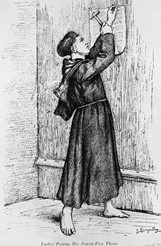 This month we began some serious preparation for an upcoming trip to Germany. Next year will be the 500th anniversary of the Protestant Reformation, and my church choir (http://www.blc-denver2.org/ministries/music/adult-choirs/chancel-choir/) has decided to mark the occasion by taking a tour. We will travel through the area associated with Martin Luther, the seminal theologian whose questioning of Roman Catholic dogma led to the breach of Christian denominations. During this tour, we plan to visit the historic sites associated with Luther and to perform in cities including Berlin, Leipzig, and Prague.
Because my husband/tech advisor has much German and Dutch heritage while I might have a little of the same, we plan to tack a few days onto this trip to explore the areas of our roots. So far we have done these things to get ready for this trip:
- My husband/tech advisor continues to document his German and Dutch lines (Dols, Flottemesch, Kirchner, Walz, Wohrman) as best as he can to identify villages we should visit.
- We booked a flight to Hamburg on Icelandair, and from there we will rent a car and drive through the areas of our origins.
- We paid our first installment for the choir tour.
- At my local library’s used book sale last weekend, I picked up a book on conversational German and a German/English dictionary.
Now I am raring to go. Next spring seems a long way away, but anticipation is half the fun. While we wait we have more time to work on our German genealogy and to study up on some key German phrases.
Tschüss!
In Memory of Mary Ann
 For the fifth time this year, we have lost a family member. It has been a bad year.
Mary Ann was my daughter-in-law’s beloved grandmother, 83 years old. She lived miles away in Oklahoma, but she stayed closely in touch with her grandchildren. They spoke on the phone often, and the younger generation regularly received care packages from their grandma. They visited back and forth, too.
Mary Ann was one of the friendliest and most generous people I have known. She paid for preschool for her great-grandchildren as long as they attended a church-affiliated one.
A week ago, she missed her usual Sunday morning church service. Her fellow parishioners became concerned and sent someone to check. Of course they soon found that she would not be attending church with them anymore.
Today I will attend a memorial service for her here in Colorado, her long-time home before she retired in Oklahoma. It’s too bad she cannot be there in person to greet all of us. She would have loved a large family gathering. She and Charlie probably will watch from above.
Mary Ann, fondly remembered, sadly missed.
Floundering in Indiana
 My Sherman family lived in Indiana during the 1860’s, mostly in Johnson County. I have a little information about them at that time but not enough. Big events occurred in the family during that decade, events for which I have no proof or documentation:
- My ancestor Thomas Sherman (1841-1912) is said to have married a German girl named Katherine sometime during the Civil War. They had a daughter, Anna Petronellia, born 1 April 1865 near Indianapolis. The wife died shortly thereafter. I have found no proof of this marriage in Indiana civil or church records. I have found no grave for Katherine. Her reported maiden name, Stillenbaugh, does not appear in the modern-day German phone book, so I suspect this name has been corrupted by the family through the years.
- Thomas and several family members had relocated to Indiana from Kentucky in the early 1860’s. His father Daniel sold land in Madison County, Kentucky in 1863. Daniel disappeared from the record after that. I have not found a grave or any other information about him in Indiana or elsewhere after the land sale. His wife Rebecca was a widow by 1870.
- Some of Thomas’ descendants claim he served the Union during the Civil War, enlisting at Louisville, KY. I have not found a service record for him from Kentucky or Indiana.
Over the years I have searched every Indiana record I can find in an effort to learn about Thomas’ first marriage and his Civil War service. I have looked for information on the death of Daniel Sherman which must have occurred during the same time period. Nothing.
I have heavily researched most of the children in the family in an effort to shed light on the lives of Thomas and Daniel. I have a couple of people to go—sisters, Polly, Emily, and Elizabeth. As we all know, searching women’s lives presents quite a challenge. Yet this is the only avenue I have left in my effort to uncover information in the Sherman men in my direct line during the 1860’s.
52 Ancestors in 52 Weeks nos. 25 & 26—Antti Abelsson Mattila (1826-1882) and Elisabeth Myllynen (1836-a. 1908)
Born on 4 November 1826, Antti Mattila lived during the years when Finland retained a strong legacy of the Swedish language in both spoken use and record-keeping. Hence, in the records we sometimes find him called by his Finnish name, Antti, and sometimes by his Swedish name, Anders. The English version of this name is Andrew.
He must have been named for his grandfather because his father’s name was Abel Andersson (c. 1798-1852). The Andersson patronymic means son of Anders. Abel was Anders’ son, so Antti (Anders) was Anders’ grandson. Antti’s mother was Greta Caspersdotter (c. 1798-?). Families at the time had no surnames, and women kept their own names after marriage. During Antti’s life, however, the idea of surnames began to catch on, and his father increasingly became known as Abel Andersson Mattila.
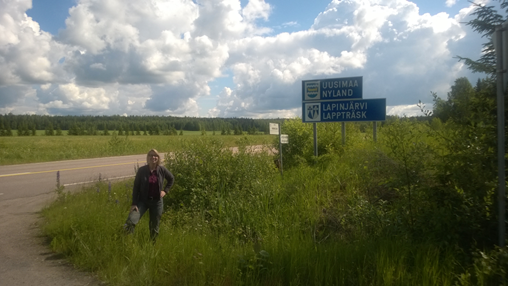 The family lived in the south of Finland, in the Uusimaa province where Helsinki is the capital.
Antti was baptized in the Lapinjärvi parish northeast of Helsinki when he was three days old, on 7 November 1826. He had an older sister Eva (b. 1824) and at least three younger siblings: Abel (b.1829), Anna (b. 1832), and Johannes (b. 1842).
At the time of his birth, Antti’s family lived on the Kimoböle farm. The family remained in the Lapinjärvi parish, and Antti’s father died there in 1852 from a heart attack at age fifty-four. Until modern times, heart disease has been a leading cause of early death in Finland.
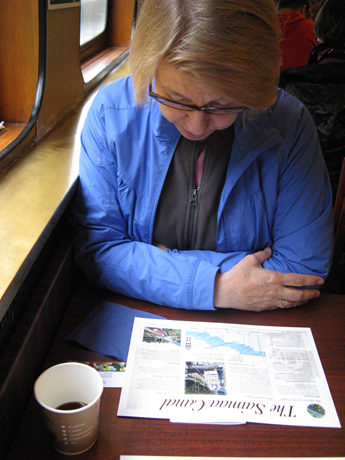
Although he was the oldest son, Antti left the family home. At some point he made his way east to the area of Viipuri, Finland’s second-largest city at the time. Perhaps he was lured there by the prospect of work on the Saimaa Canal being built between Lake Saimaa and Viipuri in the 1850’s.
On the Saimaa Canal boat:
Eventually, he met a young woman, Elisabeth Myllynen, whom he married on 16 August 1863 in the Viipuri rural parish. She was the daughter of Simon Mattson Myllynen (1810-1857) and Sofia Henriksdotter Ampuja (c. 1812-?). Elisabeth, or Liisa, was a native of the area having been born on the Tervajärvi farm on 25 April 1836 and baptized in the rural parish on 8 May 1836.
Elisabeth was part of a large family of approximately seven boys and three girls. Elisabeth was several years older than her sisters Helena (b. 1841) and Regina (b.1844). The number of brothers in the family is unclear from the existing records, but they seem to include the following:
- Matthias (b. 1834)
- Henric (b. 1838) probably died young
- Henric (b. 1841)
- Philip (b. 1847) probably died young
- Adam (b. 1849) probably died young
- Filip (b. 1851)
- Adam (b. 1851)
The second Filip and Adam, although born the same year, were not twins. The family seemed to re-use well-liked names if a child died. This was common practice.
Antti and Elisabeth did not settle near her family on the Tervajärvi farm. Instead they went southwest of Viipuri and settled in a coastal village. Not far from the city, they may have been able to see the ancient castle built there by the Swedes in the 1200’s.
Husband/Tech Advisor with Viipuri castle in the background:
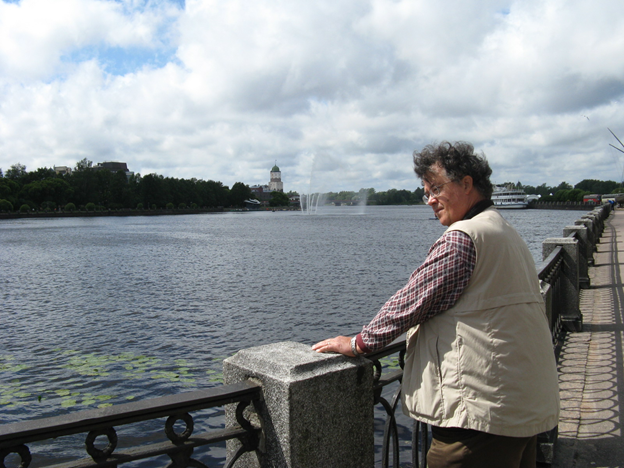
Antii worked as a steward, and they began their family. They had eight daughters and a son:
- Karolina, born 10 September 1863 at Horttana and baptized 20 September 1863. She was confirmed in 1878 in the Viipuri rural parish, but nothing more is known of her. She may have been one of the sisters purported to have married a Russian soldier.
- Eva Emilia, born 7 November 1864 at Hortanna and baptized 13 November 1864. She, too, was confirmed in the Viipuri rural parish in 1879 and may also have married a Russian soldier.
- Helena, born 20 May 1868 at Korpela Autio and baptized 28 May 1868 in the rural parish. She died from tuberculosis in 1884 at age 15 in Hortanna.
- Anna, born 23 May 1866 at Hortanna and baptized 1 June 1866 in the rural parish. Shortly after her father’s death, Anna moved out of the Viipuri area at the age of 17 and relocated to the coastal city of Kotka. A couple of years later she married Charles Anderson. They emigrated to the United States and first settled in Eveleth, Minnesota. When Anna and Charles had no children of their own, they adopted Charles and Helen Mais in the early 1900’s. Charles Anderson died between 1910 and 1920, but Anna lived another 30 years. She migrated to Hibbing, Minnesota where she was a member of the Finnish Temperance Society. She must have taken this seriously because her great-niece Joyce Bentsen Reed recalled that Mrs. Anderson strongly disapproved of liquor. She even left her niece Aida Mattila’s wedding reception in a fit of pique when she learned that her brother Alex was serving alcohol. Anna died in Hibbing on 28 April 1947 at the age of 80.
- Sofia, born 7 April 1870 at Korpela Autio and baptized in the rural parish on 1 May 1870. There she married Kalle Ville Ripatti on 15 November 1896. They had three children, Rosa Wilhelmina, Olga Alina, and Juhana Aleksander between 1896 and 1898. A few months after Juhana’s birth, Sofia’s 23-year-old husband Kalle drowned at Kolikkoinmaki (an eastern suburb of Viipuri) on 12 October 1899. Sofia’s life as a young widow after this tragic event is unknown. Her daughter Rosa eventually emigrated to America about 1913, and she too settled in the Hibbing area. She married Waino Porras and they had one son, Arthur, in 1919. Rosa died of pneumonia in 1941 at the age of 44 in Hibbing. According to family lore, she had been found nearly frozen in a snow bank before her death.
- Ida Marie, born 15 July 1872 at Korpela Autio and baptized in the rural parish on 29 July 1872. She married Juhana Mattsson there on 9 November 1890. For the next ten years they lived near Viipuri and had five children. After that, Juhana disappears from the record and Ida relocated to Kotka. In 1908, her brother-in-law Charles Anderson returned to Finland to accompany her and her surviving children to the United States. They traveled under the Mattson surname on the S.S. Republic and landed in Boston. Her travel documents describe her as 5’3″ tall with blond hair and blue eyes. Upon their arrival, Ida purportedly married a man named Sam Parks, and they settled on Minnesota’s Iron Range in Biwabik in about 1909. Together, she and he had one child, and her other children assumed the Parks surname. Sam Parks disappears from the record after the birth of their daughter. Ida’s life was cut short by stomach cancer a few years later in 1917. She died in Biwabik at the age of forty-five. Her children included:
- Elsa (1892-b. 1978) born in Finland; married Edward Glass and remained in Minnesota,
- Alice (about 1893-b. 1978) born in Finland; married William Goldsworthy and settled in Wayne County, Michigan,
- Aleksander—born in Finland, and died at two months of age in 1894,
- Yrgo (George) (about 1896-b. 1978) born in Finland,
- Martha (1900-2000) born in Finland; married (1) Joseph Hendrickson, (2) Ray Hyzer and lived in Berkeley, California,
- Bertha Ethel (1910-1986) married Eliot Haberlitz; settled in Santa Barbara, CA.
- Olga, born 20 January 1874 at Horttana and baptized in the rural parish on 1 February 1874. Olga continued to live in the Viipuri area until she was twenty-seven years old. In 1901 she moved to Kotka. Her older sister Anna Anderson returned to Finland that same year to accompany her to the United States. Three years later in 1904, Olga married Oskar Silberg in Duluth, Minnesota. They settled in Superior, Wisconsin and had one son named Alex (1906-1989). Oskar died of gangrene incurred from a shipyard accident in 1935. Olga lived almost 35 years in widowhood until she died of pneumonia at the age of ninety-five in 1969.
- Auna Elisabeth, born 23 January 1876 at Alasommes and baptized in the rural parish on 5 June 1876. Auna lived a short life of just two years, dying of croup on 22 June 1878.
-
Alexander, the only son, born about the ninth of May, probably 1878. The records conflict as to the exact date, but his baptism was recorded in the Viipuri rural parish on the 12th of May, 1878.
After the births of eight daughters, we can only imagine how Antti Mattila and Elisabeth Myllynen felt upon the safe arrival of their only son Alex. Unfortunately, Antti did not have long to live to enjoy his little boy. He died at age 55 when Alex was just four years old.
According to family lore, Antti drowned at sea. The church records, however, do not confirm this story. They state that he died of tuberculosis on 27 April 1882. He was buried in the Viipuri rural parish a few days later, on 2 May 1882. He was not the only one in the family with this terrible disease; his daughter Helena would die from it a couple of years later.
So why the story of a drowning? Perhaps American family members confused this death with the drowning of Sofia’s husband Kalle Ripatti. Both traumatic events occurred long ago in faraway Finland, and it would be easy to mix up the details.
After Antti’s death, Elisabeth cared for her younger children and made her living laying out the dead. Alex often accompanied her.
She probably lived a long life. Twentieth century Finnish records are closed, so we cannot locate a death date for her. We do know she was living at least as late as 1908 when she would have been seventy-two. That year her daughter Ida listed her as next-of-kin when she sailed for America.
Divorce Not Found
 As I have worked on my Sherman line, I have spent a lot of time chasing down my ancestor Thomas Sherman’s elder brother, Anderson (1832-1910). Because of difficulty in researching such a common surname as Sherman, which the brothers shared with a couple of famous Civil War general officers including one named Thomas, searching for an unusual name combination like “Anderson Sherman” has proven easier than searching for my own Thomas. An added distinguishing bonus is the brothers’ blacksmith profession. Uncovering Anderson’s life has helped me shed light on Thomas’ life.
Yet Anderson has presented me with a conundrum. How did he free himself to marry a second wife?
I have prepared a short timeline of his life to help me sort this out:
- 1832—Anderson Sherman born in Bath County, KY.
- 1854—Anderson Sherman marries Sarah Jane Prewitt (1838-1907) in Madison County, KY.
- 1858—Anderson Sherman resides in Johnson County, IN.
- 1860—Anderson Sherman resides in Brown County, IN.
- 1863—Anderson and Thomas Sherman register together for the Civil War draft in Johnson County, IN.
- 1870—Anderson Sherman works as a blacksmith in Johnson County, IN.
- 1874—Anderson Sherman works as a blacksmith in Johnson County, IN.
- 1876—Anderson and Sarah Jane’s last child, Minnie, is born in Johnson County, IN.
- 1880—Sarah Jane Sherman, widow, lives in Johnson County, IN. Anderson Sherman, widowed, lives in Edgar County, IL. Huh?
- 1882—Anderson Sherman marries his brother Jasper’s widow, Armecia, in Edgar County, IL.
- 1884—Anderson Sherman of Edgar County, IL applies for a Civil War pension based on his service as a blacksmith.
- 1889—Twins Maud and Claud Sherman born to Anderson and Armecia Sherman in IL.
- 1900—Anderson Sherman works as a blacksmith in Saline County, MO.
- 1910—Anderson Sherman, local blacksmith, dies at Saline County, MO and is buried at Antioch Cemetery in Liberty Township.
- 1912—Thomas Sherman’s obituary lists Anderson Sherman of Missouri as a survivor.
Again I ask, how did Anderson and Sarah Jane’s marriage end? He left Indiana sometime between the birth of their youngest child in 1876 and his enumeration on the Illinois census in 1880. His wife held herself out as a widow that year.
At least one person has taken her at her word and built a FindAGrave memorial for Anderson in the Nineveh, IN cemetery showing an 1880 death date. The cemetery has no record of this interment. I suggest that is because he did not die that year, nor was he ever buried there. Sometime before 1880, he left Indiana for Illinois and ultimately Missouri, where he died in 1910.
I thought perhaps Anderson and Sarah Jane actually divorced and simply claimed widowhood to avoid social stigma. Unfortunately, the Johnson County, IN courthouse has no record of such a divorce. So did Anderson simply desert his wife and eight children in Indiana to start a new life in Illinois between 1876 and 1880? I can find no other explanation.
Anderson is not my direct ancestor, so I will not pursue this question any further for the time being. But if any of his descendants (he had eleven children) have an explanation, I would like to hear it.
We Bring Home a Genealogy Treasure
 We had vacation time last week and took a trip to Wyoming to visit family around that state. We also spent a glorious day swimming in the hot springs at Thermopolis State Park. And off course, we stayed with my mother-in-law for part the week.
She used to pursue genealogy, trying to track her Walz and Flottemesch families back to their German and Dutch homelands. Over the years she accumulated several folders full of documents on these lines.
We borrowed the folders from her and brought them home to add her information to our genealogy database. This week my husband/tech advisor has worked to scan and preserve those records we did not already have. Being a tech guy, he enjoys the computer aspect of our genealogy work.
As he works through this task, he has compared his mother’s genealogical conclusions with his own. Sometimes they differ, and he also enjoys resolving the conflicts by reviewing all the evidence.
In this way, he makes sure that we update our website with the most accurate information we can find. We always try to abide by the Genealogical Proof Standard by doing a reasonably exhaustive search for information and explaining any discrepancies we find.
These Germanic lines often present a challenge. Working with the language, the Gothic script, and the name variations make German research notoriously difficult. My mother-in-law made it a little easier by collecting and saving so much information.